

What Is the Best Packaging Line Automation for Your Business?
Choosing the best packaging line automation for your business starts with the product, not the machine. A line filling glass jars has different needs from one sealing flexible pouches or boxing small components. Container shape, product flow, changeover frequency, and target output all affect equipment choices. A faster machine may look attractive, but it can create a bottleneck downstream or require more maintenance than your team can support. That matters.
Begin with the actual work. Track how many packages you need per hour, how often formats change, and where delays occur today. Note details such as a label shifting on a curved bottle or cartons collecting at the case packer. These observations give suppliers a more useful starting point than a broad request for “full automation.” Small details count.
This guide explains how packaging line automation can fit different production needs, from semi-automatic stations to integrated lines with conveyors, inspection, and case packing. It considers throughput, floor space, labor, product protection, controls, and service access. It also highlights questions to ask during vendor discussions, including how quickly operators can change formats and which parts need routine replacement. A proposal can look excellent on paper and still miss an awkward handoff between machines. That is worth checking.
There is no universal best line. A smaller system may suit a growing operation, while a high-volume facility may benefit from coordinated equipment and data monitoring. The right choice balances present needs with realistic growth, available skills, and maintenance capacity. Use the comparisons ahead to identify a practical fit, then verify performance with clear requirements and, where possible, product trials.
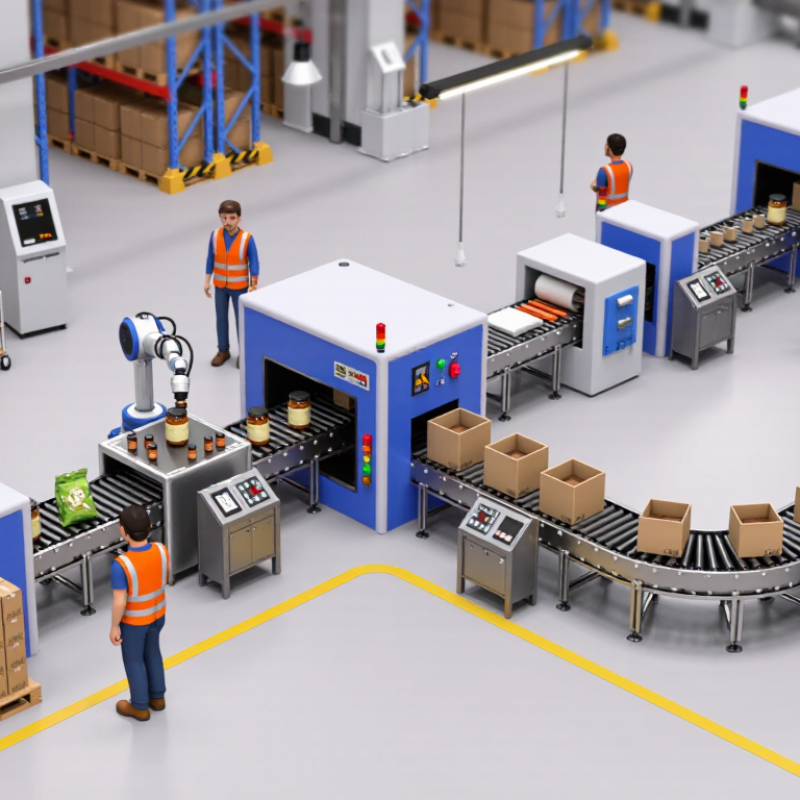
What Packaging Line Automation Includes
Packaging line automation covers the connected equipment and controls that move a product from filling to shipment. A typical line may include conveyors, fillers, sealers, labelers, inspection systems, case packers, and palletizers. Sensors check position and flow; programmable controls coordinate machine timing. A reject gate can remove a poorly sealed pouch before it reaches the case packer. Data systems may record downtime, production counts, and recurring faults.
The right scope depends on the product, package, and changeover frequency. A line handling glass bottles needs different guides and breakage controls from one handling flexible pouches. Operators also need clear access to jam points and simple ways to adjust settings. These details matter. A polished equipment layout can still overlook awkward cleaning, slow changeovers, or bottlenecks at case packing.
Industry figures offer context, though not a packaging-only measure. The International Federation of Robotics reported 541,302 industrial robot installations worldwide in 2023 in its World Robotics 2024 report, a 2% decline from 2022. That broad manufacturing total signals substantial use of robotics, but it does not show how many units serve packaging lines. For a business assessing automation, track the line’s own changeover time, rejected packages, and unplanned stops; averages can hide a stubborn bottleneck on one shift.
How Automated Packaging Systems Operate
An automated packaging line links product handling, filling, sealing, labeling, inspection, and case packing into one timed process. Sensors track product position and detect jams; a programmable controller adjusts conveyor speed and signals each machine when to act. At the end, cameras or checkweighers can flag incorrect labels, weak seals, or underfilled packs before cases are palletized. Small errors travel.
Integration matters more than machine speed alone. A 2024 International Federation of Robotics report recorded 541,302 industrial robots installed worldwide in 2023; that figure covers manufacturing broadly, not packaging lines specifically. Deloitte’s 2024 Smart Manufacturing Survey found that 86% of surveyed manufacturing executives expected smart manufacturing to be a key competitiveness driver within five years.
Those figures suggest growing investment, but automation still depends on clean changeover routines, trained operators, and reliable data. A sensor can detect a fault; it cannot explain every cause. Dust on a photo-eye or a poorly aligned carton may still stop the line.
I would measure performance at each handoff, not just count finished cartons.
The awkward truth: faster equipment can expose weak upstream processes.
Which Business Needs Shape Automation Choices
Packaging line automation should match the business behind the product, not an idealized production target. A small company with frequent product changes may benefit more from flexible filling, labeling, and case packing than from a fast, fixed-format line. Small batches change the answer. If operators switch container sizes each morning, quick adjustments can matter more than peak speed.
Seasonal businesses need capacity that can scale without sitting idle for most of the year. A growing producer with steady demand may prioritize higher throughput, reliable feeding, and space for future equipment. Fragile goods, unusual shapes, or varied pack sizes call for careful handling and adaptable guides. Floor space matters, too. Measure walkways, storage, and access for cleaning before choosing a layout.
Look beyond the purchase price. Estimate changeover time, staffing needs, maintenance skills, and the cost of downtime. A specification sheet can look convincing while overlooking a stubborn jam point or a difficult cleaning step. That is easy to miss. Test representative products and packaging in realistic conditions, and ask operators to assess the workflow. The best choice is the one your team can run, maintain, and adjust consistently as demand changes.
| Business Need | Typical Operating Conditions | Suitable Automation Approach | Why It Fits | Key Trade-Offs to Consider |
|---|---|---|---|---|
| Small or growing operation | Modest production volumes, limited floor space, and a need to keep initial investment manageable. | Semi-automatic equipment for repetitive tasks, such as filling, sealing, labeling, or case taping. | Automates labor-intensive steps while allowing operators to handle product changes, inspection, and material replenishment. | Some manual handling remains, and output may depend on operator availability and work pace. |
| High-volume, stable production | Long production runs with consistent products, packaging materials, and pack formats. | Integrated automatic line combining conveying, filling or loading, closing, labeling, and end-of-line packing. | Coordinated equipment can reduce repeated manual handling and support a consistent production flow. | Requires greater capital investment, line balancing, maintenance planning, and sufficient space. |
| Frequent product or format changes | Multiple package sizes, product variants, or short production runs requiring regular changeovers. | Flexible equipment with recipe controls, adjustable guides, quick-change parts, and accessible changeover settings. | Designed changeover features can make it easier to switch between formats without replacing the entire line. | Flexibility can add equipment complexity; confirm that the system supports the actual product and package range. |
| Labor-constrained operation | Difficulty staffing repetitive or physically demanding packaging tasks across a shift. | Targeted automation for bottleneck tasks, such as case forming, product loading, palletizing, or repetitive sealing. | Addresses specific sources of manual workload while keeping people available for supervision, quality checks, and exception handling. | The process still needs trained staff for setup, replenishment, troubleshooting, and routine maintenance. |
| Space-constrained facility | Restricted production-floor area, tight access routes, or limited room for conveyors and accumulation. | Compact or modular equipment, with a layout designed around existing material flow and service access. | A carefully planned footprint can automate selected steps without requiring a full line replacement. | A compact layout may limit access, buffering, or future expansion if these needs are not planned in advance. |
| Traceability and quality-focused operation | Need to verify package details, record production information, or identify rejected products. | Packaging equipment integrated with inspection, code verification, checkweighing, reject handling, and production data systems as required. | In-line checks can identify certain packaging errors during production and support more consistent records. | Inspection limits and data-system compatibility should be validated for the product, package, and applicable requirements. |
| Business planning for expansion | Current needs are moderate, but future output, product range, or additional shifts may grow. | A phased, modular line with compatible controls, utilities, interfaces, and space reserved for future equipment. | Allows investment to be staged while keeping a path open for adding automation later. | Future expansion is not automatic; equipment interfaces, capacity, layout, and controls should be planned together. |
Selection note: Match automation to actual production volumes, product and package characteristics, changeover frequency, available space, staffing, maintenance capability, and budget. Validate equipment performance using representative products and packaging materials.
How to Compare Packaging Line Automation Options
Compare packaging line automation options using your actual products, shift patterns, and output targets. A line that handles 60 cartons per minute may still struggle with fragile containers or frequent size changes. List each product format, required speed, changeover frequency, and available floor space before reviewing equipment. These details make supplier proposals easier to compare. They also expose gaps early.
Look beyond the headline production rate. Check how quickly operators can clear jams, adjust guides, and switch formats. Ask what training, spare parts, and routine maintenance the system requires. Then compare integration needs with your existing conveyors, scales, and case packers. Request a trial using your own packaging materials. Watch for misfeeds, damaged cartons, and awkward operator movements. A spreadsheet helps, but it can miss small daily frustrations. One estimate may be wrong; verify it against observed results.
Tips: Compare total operating costs, not only purchase price. Include labor, energy, maintenance, and expected downtime. Ask for references from businesses with similar products and changeover demands. If possible, test one representative production run before committing. That matters.
What to Assess Before Installation and Expansion
Before selecting packaging line automation, measure the work your line actually performs. Record hourly output, changeover time, rejects, brief stops, and manual interventions across different shifts. Check every package size and material, not just the most common one. A machine that meets its rated speed may still create a queue at the labeler or case packer.
The International Federation of Robotics reported 541,302 industrial robot installations worldwide in 2023 in its World Robotics 2024 report. This figure covers industries broadly, not packaging alone, but it shows automation is becoming commonplace. Real runs matter. Compare expected output with your own operating data, and leave room for slower products and awkward changeovers. Before installation, confirm floor space, electrical supply, compressed air, guarding, and access for cleaning and maintenance. Check that controls can exchange useful data with existing equipment. Expansion needs the same scrutiny: a faster filler will not fix a downstream bottleneck. A spreadsheet can also miss things; staff feedback may reveal recurring jams or difficult adjustments that production totals hide. Weigh training, spare parts, and downtime during commissioning alongside the equipment price.
Related Posts
-
Understanding the Significance of Automatic Packaging Machines in Modern Manufacturing
-
Revolutionizing Efficiency in Supply Chains with Automated Packaging Technology and Industry Insights
-
Top 10 Tips for Choosing the Best Automated Packaging Machine for Your Business
-
2026 How to Choose the Right Packaging Equipment for Your Business?
-

How to Choose the Right Packaging Equipment for Your Business Needs
-
Top Packaging Systems Explained What You Need to Know?
