What Is the Best Vacuum Packaging Machine from China?
Choosing the best vacuum packaging machine from China requires more than comparing prices, pump sizes, or stainless-steel finishes. Performance depends on product moisture, package dimensions, sealing frequency, film structure, and operator skill. A compact chamber machine may suit a butcher shop, while a double-chamber model better serves a busy factory.
Market research shows continued demand. Grand View Research estimates that the global vacuum packaging market will expand steadily through 2030, supported by food preservation, retail convenience, and longer distribution routes. The PMMI State of the Industry reports also identify automation, labor efficiency, and packaging flexibility as important investment drivers. These figures indicate opportunity, not proof of machine quality.
“Vacuum packaging is not a substitute for refrigeration,” food-safety consultant Dr. Richard F. Stier has repeatedly emphasized. That warning matters. A vacuum packaging machine removes air, but it does not eliminate every microbial risk. Temperature control, sanitation, validated packaging materials, and staff training remain essential.
Chinese manufacturers now offer practical options, from tabletop sealers to automatic belt machines with digital controls. Some provide excellent weld consistency and responsive engineering support. Others look impressive in photographs but reveal weak pumps, uneven seals, or limited spare-parts support after installation. The difference can be felt beside the machine: oil mist, noisy cycling, a wrinkled seal, or a bag that slowly inflates overnight.
The “best” choice is therefore conditional. It should match your throughput, product, facility, compliance needs, and service expectations. A lower purchase price may become expensive. That is the uncomfortable part.
This guide compares the technical details that matter before selecting a vacuum packaging machine from China.
What Is a Vacuum Packaging Machine and How Does It Work?
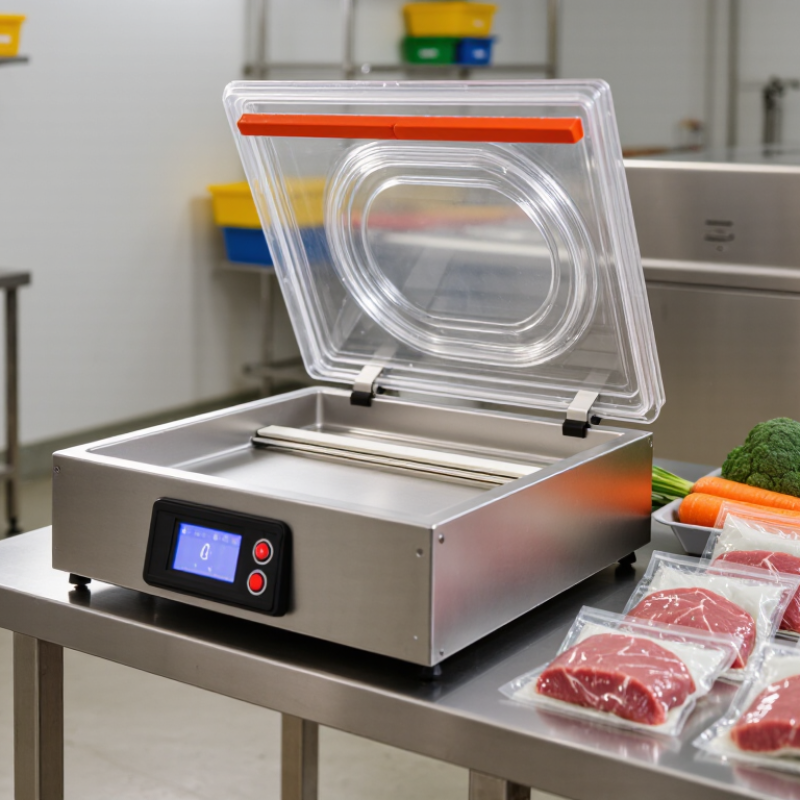
A vacuum packaging machine removes air from a pouch, then seals it with heat. In a chamber model, the product and pouch sit inside the chamber. The lid closes. A pump reduces internal pressure. When the selected vacuum level is reached, heated bars compress and seal the pouch. The chamber then returns to normal pressure, tightening the film around the product. No magic occurs.
Vacuum packaging limits oxygen exposure, but it does not sterilize food. Refrigeration and hygienic handling remain essential. UNEP’s Food Waste Index Report 2024 estimated that 1.05 billion tonnes of food were wasted in 2022. FAO also reports that about 13.2% of food is lost between harvest and retail. Better packaging may reduce some damage, although the machine alone cannot solve waste. Excessive vacuum can crush soft products, draw liquid into the pump, or distort fragile packaging.
When assessing a Chinese vacuum machine, I would test pump performance, chamber depth, seal width, and temperature stability. A stable seal matters more than an impressive vacuum number. ASTM F88/F88M provides a recognized method for testing seal strength. I would also run repeated cycles with real products, not empty pouches. One practical mistake is trusting the display too quickly. Residual air, uneven loading, and weak film can remain unnoticed. The imperfect part is unavoidable: different products need different settings, and operators still need judgment.
Which Types of Vacuum Packaging Machines Are Made in China?
China produces several vacuum packaging machine types, each suited to a different production rhythm. External-suction machines handle bags outside the chamber and fit small workshops. Chamber machines remove air inside a sealed enclosure, improving consistency for liquids, powders, and irregular products. Single-chamber models suit modest output, while double-chamber systems support faster loading and unloading.
Automatic belt machines are common in meat, seafood, and prepared-food lines. Their conveyor design reduces manual handling. Thermoforming machines create film pockets, vacuum the product, and seal it continuously. They are suitable for high-volume sliced foods and medical packaging. Tray-sealing machines can combine vacuum and modified-atmosphere functions, protecting products in rigid trays. Skin-packaging equipment gives a close, retail-ready finish.
The PMMI 2023 State of the Industry report identifies automation and labor efficiency as major packaging investment drivers. This supports China’s broad supply of semi-automatic and fully automatic equipment. Smithers’ “The Future of Flexible Packaging to 2028” also reports continued growth in flexible packaging demand, especially for food applications. However, report definitions differ, so market percentages should not be compared blindly. In factory evaluations, pump capacity, sealing-bar width, film compatibility, and cleaning access matter more than impressive specifications. A larger pump is not automatically better. Poor loading discipline can still leave wrinkles, weak seals, or residual oxygen. That detail is easy to underestimate.
What Is the Best Vacuum Packaging Machine from China? - Which Types of Vacuum Packaging Machines Are Made in China?
| Machine Type | Typical Vacuum Level | Typical Output or Cycle | Common Bag or Product Size | Best-Suited Applications | Main Advantages | Common Limitations |
|---|---|---|---|---|---|---|
| External Suction Vacuum Sealer | Approximately -60 to -80 kPa | Usually 15–40 seconds per bag | Small to medium embossed bags; commonly up to 300–400 mm sealing width | Household foods, small workshops, retail products and low-volume packing | Low purchase cost, compact structure and simple operation | Lower vacuum performance than chamber machines; not ideal for liquids or powders |
| Single-Chamber Vacuum Packaging Machine | Approximately -95 to -99.8 kPa, depending on pump and product | About 15–40 seconds per cycle | Small and medium bags; sealing bars commonly 300–600 mm | Meat, seafood, vegetables, hardware, medical supplies and general products | Good vacuum consistency, supports smooth bags and handles many product types | The lid must close for every cycle, so labor efficiency is lower than continuous systems |
| Double-Chamber Vacuum Packaging Machine | Approximately -95 to -99.8 kPa | Roughly 2–8 bags per cycle; about 10–30 seconds per cycle | Medium to large bags; sealing bars commonly 500–1,000 mm | Commercial food processing, seafood, frozen products and medium-volume production | Higher productivity than single-chamber models and suitable for liquid-containing products | Larger footprint, higher energy use and greater initial investment |
| Continuous Band Vacuum Sealer | Usually -60 to -90 kPa, depending on configuration | Approximately 0–12 m/min conveyor speed | Small to medium flat bags; often 6–15 mm seal width | Powders, grains, snacks, dried foods and products requiring frequent sealing | Continuous feeding, adjustable conveyor height and strong production efficiency | Not suitable for every liquid or irregular product; vacuum performance varies by bag design |
| Thermoforming Vacuum Packaging Machine | Typically -90 to -99.8 kPa | Approximately 5–20 cycles per minute, depending on format and product | Formed trays or pockets; film widths commonly 250–600 mm | Processed meat, cheese, seafood, ready meals and retail portions | Automated forming, filling, vacuuming, sealing and cutting in one production line | Higher tooling cost, longer changeover time and greater operator skill requirements |
| Rotary Vacuum Packaging Machine | Approximately -95 to -99.8 kPa | Around 4–12 cycles per minute, depending on chamber layout | Medium and large bags; multi-station sealing configurations available | High-volume meat, seafood, agricultural products and industrial goods | Improved workflow, reduced waiting time and relatively high production capacity | Requires more floor space, maintenance planning and trained operators |
Note: The specifications shown are typical industry ranges for vacuum packaging machines commonly manufactured in China. Actual performance depends on pump capacity, chamber dimensions, bag material, product temperature, moisture content and sealing configuration.
What Features Define the Best Chinese Vacuum Packaging Machine?
The best Chinese vacuum packaging machine is defined less by appearance than by repeatable performance. In production trials, I look for stable vacuum pressure, even sealing, and simple controls. A clear chamber lid helps operators watch moisture, trapped air, and seal formation. That matters. A machine that reaches deep vacuum once but varies across ten cycles creates waste and weak package protection. Chamber dimensions should match the product, not an imagined maximum workload. Oversizing can increase energy use and slow daily handling.
A durable model usually combines food-grade stainless steel, a strong hinge, and a replaceable sealing bar. The vacuum pump needs enough capacity for the bag volume and operating rhythm. Oil access, filtration, and cooling design are practical details technicians notice quickly. Digital settings should store useful parameters without hiding manual control. Touchscreens look modern, but a physical emergency stop and readable status indicators remain valuable. I would also check seal width, temperature stability, and performance after continuous cycles. Small tests reveal more than catalogue claims.
Reliable Chinese manufacturers should provide wiring diagrams, spare-part lists, test records, and responsive technical support. Ask for sample trials using your actual product and bag material. Results may change with powder, liquid, sharp edges, or warm contents. That is where careful evaluation matters. Independent inspection can verify construction quality and electrical safety before shipment. I would not trust vague phrases such as “industrial grade” without measurable data. Even a well-built machine may need better training or revised sealing time. The best choice performs consistently in your workspace, not merely with the longest feature list.
How Should You Compare Chinese Vacuum Packaging Machine Suppliers?
Choosing the best vacuum packaging machine from China requires more than comparing prices. Supplier performance matters more than catalogue photos. MarketsandMarkets estimates the global vacuum packaging market will grow from about USD 29.9 billion in 2023 to USD 40.4 billion by 2028. This growth increases supplier choices, but quality can vary. Ask for measured pump capacity, sealing temperature range, cycle time, and film compatibility. Request a live video test using your actual product. A machine that seals dry food may struggle with liquids or sharp edges.
I have found that total ownership cost reveals hidden differences. Compare stainless steel thickness, electrical components, vacuum stability, and spare-part availability. Check whether the supplier provides wiring diagrams, operating training, and remote troubleshooting. Grand View Research reports continued growth in automated packaging demand, linked to productivity and labor-saving needs. Therefore, evaluate automation carefully. A lower-priced machine may require more manual work. That weakens its real return. I would also inspect factory quality records, export experience, and product traceability. One overlooked detail can stop production.
Tips: Build a comparison sheet with identical questions for every supplier. Record pump power, chamber size, warranty length, delivery time, and test results. Ask for references in similar industries. Do not trust only a polished sample video. Independent inspection is useful, although I once underestimated its cost. That was a mistake worth remembering.
How Can You Choose the Right Machine for Your Packaging Needs?
Choosing a vacuum packaging machine from China starts with your product, not its advertised pump speed. In trial runs, I measure bag size, product moisture, sealing temperature, and daily output. A dry snack needs different handling from fresh meat or liquid-rich food. The wrong chamber depth can leave wrinkles near the seal. That small defect can become a serious shelf-life problem.
For small batches, a single-chamber machine may offer practical control and easier cleaning. Factories with continuous orders may need a double-chamber design to reduce loading delays. Check the pump’s ultimate vacuum, sealing bar length, cycle time, and electrical requirements. Ask for test videos using your actual bags and products. A polished demonstration is not enough. Request seal-strength results after cooling, not only immediately after sealing. Inspect stainless-steel thickness, lid hinges, gasket replacement, and spare-part access. These details show whether maintenance will be realistic in your workshop.
Reliable suppliers provide wiring diagrams, operating manuals, inspection records, and clear warranty terms. Confirm safety features, emergency stops, and compliance documents for your destination market. Do not select by price alone. One overlooked cost. A cheaper machine may consume more electricity or require frequent seal-wire changes. I would run a seven-day sample test before approving a purchase. Even then, my judgment could be wrong if seasonal demand changes. Leave room for training, cleaning time, and future bag sizes.
Related Posts
-
How to Choose the Right Vacuum Packaging Machine for Your Business Needs
-
7 Essential Reasons Why the Best Vacuum Packaging Machine Can Enhance Your Business Efficiency
-
How to Choose the Best Vacuum Packaging Machine for Your Business?
-
The Future of Intelligent Packaging Line Automation: Transforming Global Supply Chains
-
How to Choose the Right Liquid Filling Machine for Your Business Needs
-

Top 10 Insights into Chinas Packaging Industry for Global Buyers?