


China Top 10 Coffee Packaging Bag Manufacturers?
Coffee is no longer judged only by origin, roast, or flavor. Its package now influences freshness, sustainability, shelf visibility, and customer trust. This article introduces China’s Top 10 Coffee Packaging Bag Manufacturers and examines how they address these connected demands.
The International Coffee Organization reported global coffee consumption at approximately 177 million 60-kilogram bags in 2023/24. That volume creates enormous packaging pressure. Every bag must help control oxygen, moisture, light, aroma loss, and transport damage. The Smithers report, The Future of Sustainable Packaging to 2028, also highlights growing pressure for recyclable structures and lower material use. Yet sustainability claims can become vague. A thinner bag is not automatically a better bag.
Coffee educator James Hoffmann has stated, “Coffee is a perishable product.” That simple observation explains why valve bags, high-barrier laminates, zipper seals, and nitrogen flushing remain important. These features are not decoration. They protect roasted beans inside warehouses, trucks, and retail shelves. Still, no package can rescue poorly roasted or badly stored coffee. That part is often forgotten.
The manufacturers reviewed here are assessed through practical criteria: barrier performance, sealing consistency, custom printing, food-contact quality systems, minimum order quantities, export experience, and material transparency. Certifications, testing records, and factory communication matter more than impressive product photographs. Some suppliers may offer attractive prices but limited technical evidence. Buyers should question that gap. This guide aims to provide a useful starting point, while recognizing that packaging performance must be verified for each coffee, filling process, and market.
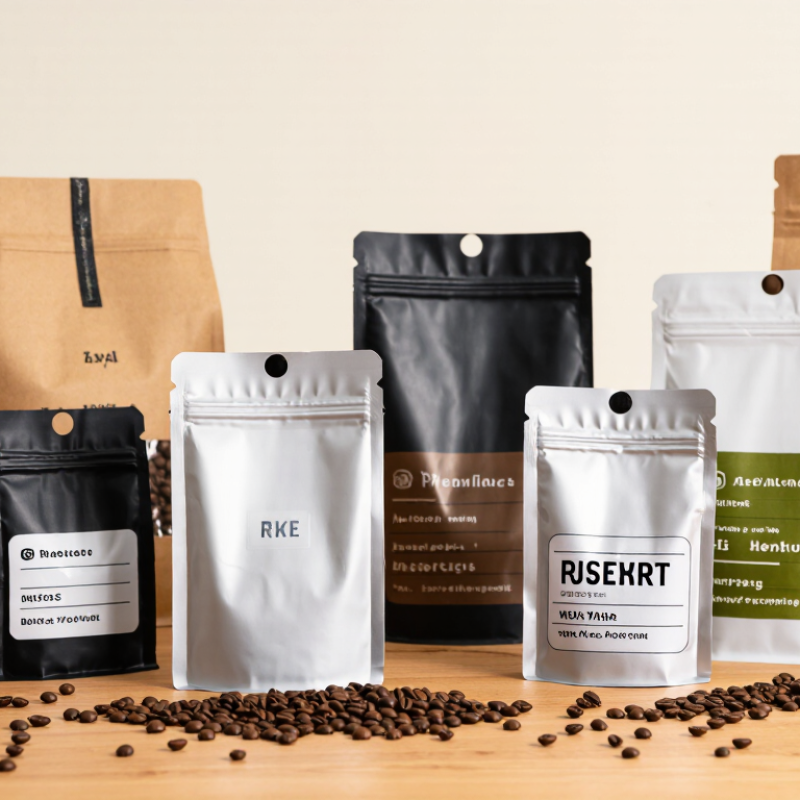
What Defines a Leading Coffee Packaging Bag Manufacturer in China
China Top 10 Coffee Packaging Bag Manufacturers?
What Defines a Leading Coffee Packaging Bag Manufacturer in China
A leading manufacturer starts with coffee protection, not attractive printing. The ICO reported global coffee consumption at 177.9 million 60-kilogram bags in 2023/24. This volume increases pressure on packaging performance. Reliable suppliers test oxygen transmission, moisture resistance, seal strength, and valve function. A roasted-bean bag should protect aroma during storage, transport, and shelf display.
Technical evidence matters.
During factory evaluations, buyers should request batch records, migration test reports, and material specifications. ISO 9001 supports process control, while ISO 22000 reflects stronger food-safety management. Smithers’ flexible-packaging outlook highlights downgauging and recyclable mono-material structures as important development directions. However, sustainability claims need measurable proof. A thinner pouch is not automatically better if it loses barrier performance or causes more product waste.
Practical experience also separates capable manufacturers from ordinary converters. Engineers should understand roast dates, degassing pressure, filling speed, and different sealing temperatures. Production lines need calibrated instruments and traceable inspections. Small details matter, such as a clean zipper track or a valve positioned correctly above the coffee bed. No factory is flawless. I would still question suppliers that promise universal compatibility without pilot testing. Samples should be filled, sealed, stored, and inspected under realistic conditions before large production begins.
China Top 10 Coffee Packaging Bag Manufacturers? - What Defines a Leading Coffee Packaging Bag Manufacturer in China
| Rank | Anonymized Manufacturer Profile | Typical Production Capability | Coffee Bag Formats | Common Material Structures | Barrier & Freshness Features | Printing & Customization | Typical Lead Time | Relevant Quality Controls |
|---|---|---|---|---|---|---|---|---|
| 1 | Large-scale flexible packaging specialist | High-volume export production; suitable for national retail and established coffee programs | Flat-bottom Side-gusset Quad-seal Pouches | Paper/PE, PET/PE, PET/AL/PE, PET/MPET/PE, recyclable PE-based laminates | High oxygen and moisture resistance; one-way degassing valve options; heat-sealable construction | Rotogravure or digital printing; matte, gloss, soft-touch and spot-varnish finishes | Approximately 25–40 days after artwork and specification approval | Incoming material inspection, seal-strength testing, color control and batch traceability |
| 2 | Sustainable coffee-packaging manufacturer | Medium-to-high capacity focused on recyclable and reduced-material packaging projects | Stand-up pouch Flat-bottom Side-gusset | Mono-PE, mono-PP, paper-based laminates and downgauged flexible films | Recyclable barrier films; optional EVOH or metallized layers depending on market requirements | Digital and flexographic printing; water-based or low-migration ink options | Approximately 20–35 days for repeat structures and 30–45 days for new developments | Material-composition verification, migration testing and packaging-seal evaluation |
| 3 | Premium specialty-coffee bag producer | Small-to-medium production runs with strong focus on appearance and specialty-roaster details | Flat-bottom Quad-seal Tin-tie bag Pouch | Paper/PE, kraft paper laminates, PET/AL/PE and high-barrier transparent films | Excellent aroma protection; degassing valve, zipper and tear-notch configurations | High-definition gravure or digital printing; foil stamping, embossing and textured finishes | Approximately 18–30 days for standard specifications | Visual inspection, dimensional checks, print-register control and valve adhesion testing |
| 4 | Flexible packaging converter with broad format coverage | High production flexibility for multiple bag sizes, structures and regional market requirements | Pillow pouch Side-gusset Flat-bottom Stick pack | OPP/PE, PET/PE, PET/MPET/PE, kraft paper/PE and foil laminates | Selectable oxygen, moisture and light barriers; compatible with nitrogen flushing | Up to eight-color rotogravure printing; zipper, valve, handle and laser-score options | Approximately 25–40 days depending on structure and order quantity | Laminate-bond testing, coefficient-of-friction checks, seal testing and roll inspection |
| 5 | Small-batch and private-label packaging supplier | Low-to-medium minimum order quantities; suitable for emerging roasters and test launches | Doypack Flat pouch Side-gusset Sample bags | Paper/PE, PET/PE, kraft/METPET/PE and recyclable PE structures | Standard high-barrier protection with optional one-way valve and resealable zipper | Digital printing for short runs; standard stock colors and custom artwork support | Approximately 10–25 days for digital orders; 25–35 days for gravure orders | Artwork proofing, barcode verification, seal inspection and finished-packaging sampling |
| 6 | Industrial coffee and food-packaging manufacturer | High-volume manufacturing designed for automated filling and distribution operations | Quad-seal Large side-gusset Pillow pouch Bulk bag | PET/PE, PET/AL/PE, BOPP/PE and heavy-duty multilayer laminates | High mechanical strength, strong seals and protection against oxygen, moisture and light | Rotogravure printing; machine-compatible dimensions and registration control | Approximately 30–45 days for regular production schedules | Seal integrity, tensile strength, drop testing, dimensional stability and production sampling |
| 7 | Digital-print packaging and rapid-prototyping supplier | Low-to-medium volume production with fast artwork changes and multiple SKU support | Flat-bottom Stand-up pouch Sample pouch | PET/PE, paper/PE, PET/MPET/PE and selected mono-material films | Standard coffee-grade barrier protection; valve and zipper integration available | Digital printing with variable data, seasonal artwork and low setup requirements | Approximately 7–20 days after final artwork approval | Digital color proofing, barcode scanning, seal testing and print-surface inspection |
| 8 | Export-oriented packaging manufacturer | Medium-to-high capacity with experience in containerized shipments and international specifications | Side-gusset Flat-bottom Quad-seal Pouch | PET/AL/PE, PET/MPET/PE, kraft paper laminates and recyclable barrier films | High-barrier structures for roasted beans, ground coffee and extended distribution cycles | Multi-color gravure printing; export carton, pallet and shipping-mark customization | Approximately 25–45 days, excluding ocean or air transportation | Lot coding, carton checks, pallet inspection, certificate management and retained samples |
| 9 | Integrated valve and accessory packaging specialist | Medium production capacity with emphasis on complete bag assemblies and accessory integration | Valve pouch Flat-bottom Side-gusset | PET/PE, PET/AL/PE, paper/PE and high-barrier recyclable film combinations | One-way degassing valves, zipper systems, tear notches and laser scoring | Gravure or digital printing; custom valve placement and accessory matching | Approximately 20–35 days for standard accessories | Valve airflow testing, adhesion testing, seal-strength checks and appearance inspection |
| 10 | Flexible packaging manufacturer serving regional and overseas markets | Medium capacity with adaptable order quantities and broad standard-bag inventory | Pouch Pillow bag Side-gusset Flat-bottom | OPP/PE, PET/PE, kraft paper/PE, PET/MPET/PE and mono-PE options | Configurable barrier level based on roast type, shelf life and distribution conditions | Flexographic, gravure or digital printing; zipper, valve and tear-notch options | Approximately 15–35 days depending on printing method and quantity | Raw-material inspection, production-line checks, finished-bag sampling and seal evaluation |
Note: The profiles above are anonymized comparative categories rather than named companies. Production capacity, minimum order quantity, lead time, material structure and certification status should be confirmed directly with each supplier before purchasing.