

How to Choose the Best Carbon Kneading Mixer for Your Needs?

Selecting the right Carbon Kneading Mixer can be challenging. With many options available, understanding your specific needs is crucial. As industry expert Dr. Emily Carter states, “The right mixer can transform your production efficiency.” Her experience in the field highlights the importance of choosing wisely.

The Carbon Kneading Mixer you select impacts your workflow and product quality. Factors such as capacity, mixing speed, and durability should guide your decision. A high-quality mixer will save time and resources, but merely choosing a popular model might not meet your unique requirements.

Consider technical specifications carefully. Look for features that enhance performance. Seek out trusted reviews and expert opinions. Reflect on your existing processes and how a mixer can improve them. Making informed choices can lead to significant advancements in your operations.
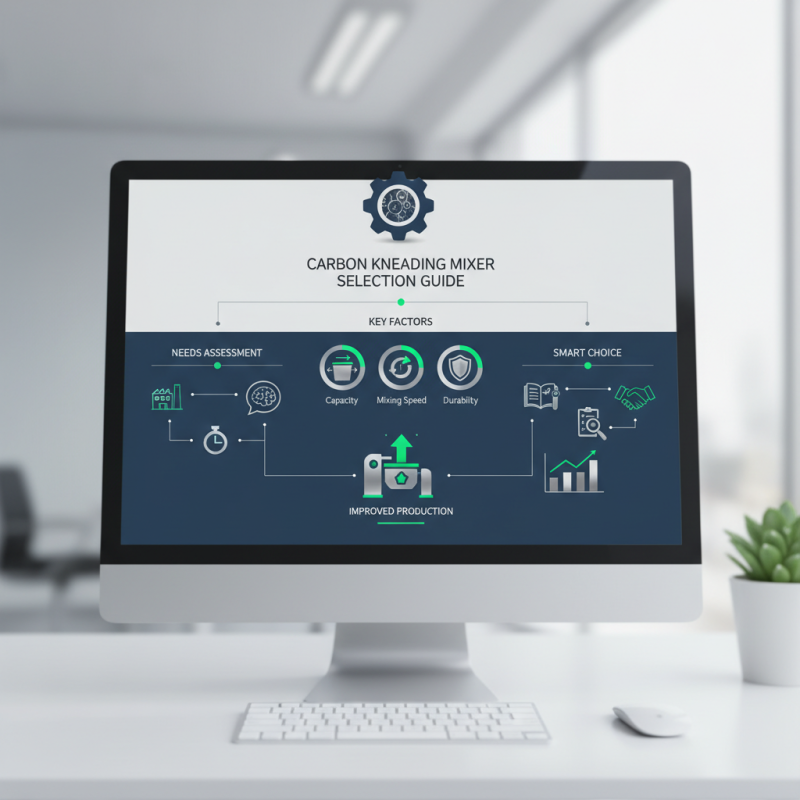
How to Choose the Best Carbon Kneading Mixer for Your Needs?

Understanding the Importance of Carbon Kneading Mixers in Manufacturing

Carbon kneading mixers play a crucial role in various manufacturing processes. They blend materials like plastics, rubber, and food ingredients. These mixers ensure that components are thoroughly combined, which is vital for achieving desired product quality. A well-mixed product improves consistency and reduces defects.

Choosing the right carbon kneading mixer can be challenging. Manufacturers must consider capacity, energy efficiency, and user-friendliness. Sometimes, a powerful mixer may seem ideal but could lead to energy waste. It's important to assess specific needs carefully before purchasing. For smaller operations, a compact model might suffice, whereas larger production lines would require a more robust option.

Mixing performance varies based on design and materials used. Some mixers might not provide uniform results, leading to inconsistent product quality. Regular maintenance and trained operators are essential to maximize efficiency. Investing in a reliable kneading mixer is not just about the initial purchase but also about long-term operational effectiveness.

Key Specifications to Consider When Choosing a Carbon Kneading Mixer

When selecting a carbon kneading mixer, it is crucial to consider key specifications that align with your specific needs. The mixer’s capacity is one of the first details to evaluate. It must be suitable for your production volume, whether it’s for small batches or large-scale operations. The build quality is equally important. A robust construction can withstand intensive use and maintain performance over time.

Another critical factor is the power of the motor. A powerful motor ensures efficient kneading and mixing, significantly affecting the consistency of the final product. Pay attention to the speed settings available as well. Different recipes may require varying mixing speeds to achieve the desired texture. The ease of cleaning is not to be overlooked either. A design that allows for easy access to all parts can save valuable time and enhance hygiene.

Consider the warranty and support offered with the mixer. Quality ensures reliability, but good customer service adds security to your investment. The specifications alone may look impressive, yet real-world performance can differ. Understanding user reviews can provide valuable insights. Reflect on whether your choice will truly meet all your processing needs. This reflection can lead to a better-informed decision.

Comparison of Key Specifications for Carbon Kneading Mixers

Evaluating the Capacity and Efficiency of Carbon Kneading Mixers

When choosing a carbon kneading mixer, evaluating its capacity and efficiency is essential. Carbon kneading mixers are vital in industries like food processing and materials manufacturing. According to industry data, mixers with a capacity of 20 to 100 liters are ideal for medium-sized businesses, providing flexibility while maintaining high-quality mixtures.

Efficiency is another crucial aspect. A high-efficiency mixer can reduce mixing time by up to 30%. This is significant for businesses aiming to enhance productivity. Look for mixers that deliver consistent results. Consistency impacts product quality, which is essential for customer satisfaction.

Tip: Always check the motor power. A stronger motor can handle thicker mixtures without overheating.

Also, consider the design of the mixer. A well-designed mixer minimizes material waste and ensures effective blending. Make sure your chosen model is easy to clean, as hygiene is critical in production processes.

Tip: Evaluate customer reviews. Real-world performance often highlights strengths and weaknesses that specifications might miss. These insights can guide your decision-making process.

Comparative Analysis of Different Types of Carbon Kneading Mixers

When selecting a carbon kneading mixer, it’s crucial to understand the types available. Various models serve different purposes. For instance, batch mixers excel in small-scale operations. They efficiently combine materials for consistent results. On the other hand, continuous mixers are ideal for larger processes. They keep the mixture flowing, perfect for industrial applications.

Different types also vary in design and functionality. Some mixers operate at high speeds, enhancing efficiency. However, this can generate excess heat, which may compromise the material quality. Low-speed mixers provide better control but are slower in processing. Evaluating your specific needs helps in making an informed choice.

Feature comparisons are essential in this decision-making process. Robust construction ensures durability and reliability in tough environments. However, some models may lack adaptability for various recipes. Further, cleaning and maintenance requirements differ significantly. A machine that requires complex disassembly can be a hindrance. Recognizing these factors lays the foundation for a practical selection.

Industry Trends: Innovations in Carbon Kneading Mixer Technology

In recent years, the carbon kneading mixer has evolved significantly. Technological innovations are shaping its design and functionality. Companies now focus on creating more efficient mixing processes. These advancements enhance productivity in various industries. Improved energy efficiency is a key trend. Mixing processes consume less energy, thus reducing operational costs.

The introduction of smart technology stands out. Many mixers now feature sensors that monitor performance. This real-time data helps operators troubleshoot issues quickly. Enhanced automation is another significant development. Modern mixers can adjust parameters automatically based on material properties. This leads to more consistent results with less human intervention.

Despite these advancements, some challenges remain. Users still report issues with maintenance and repair. Parts may wear out faster than anticipated, requiring regular oversight. Additionally, not all mixers suit every application, so careful evaluation is crucial. Understanding the specific requirements of a production environment will lead to better choices. Continuous feedback from operators can drive further improvements. This interaction enhances the technology and user experience alike.

Error: Invalid action URL is detected.