How to Choose the Right Food Packaging Machine
Choosing the right food packaging machine begins with the product, not the brochure. A dry snack, a chilled sauce, and a fragile pastry place different demands on filling, sealing, and handling. Even a slight change in moisture or texture can affect portion accuracy and package integrity. Small details matter.
Start by defining the package type, target production rate, available floor space, and expected product changes. Then compare machine formats, such as vertical form-fill-seal, tray sealing, or pre-made pouch filling. Check how quickly operators can switch sizes, load film, and access areas for cleaning. A machine that runs smoothly during a short demonstration may behave differently across a full shift. Not on paper.
Reliable selection also depends on testing with your actual product and packaging materials. Ask suppliers about seal consistency, changeover time, service response, spare parts, and operator training. Review cleaning procedures and confirm that equipment and packaging materials suit your product and applicable requirements. Consider total ownership costs, including energy, maintenance, consumables, and downtime—not just the purchase price. A fast line can still be a poor fit if it creates frequent jams or excessive waste.
This guide explains how to compare those factors and ask practical questions before investing. Bring real samples, production figures, and line-layout details to supplier discussions. Record trial results and note what remains uncertain. Even a careful checklist can miss an awkward cleaning step or a difficult film change. That is worth noticing before installation, not after.
Define Product, Pack Format, and Required Throughput in Packs per Minute
Start with the product, not the machine. A free-flowing snack, sticky sauce, and fragile pastry behave differently during filling and sealing. Note temperature, viscosity, particle size, and whether the product needs gentle handling. Then define the pack: pouch, tray, carton, or bottle. Record its dimensions, material, seal style, and expected changeovers. A small wrinkle matters. It can cause leaks, rejected packs, or extra checks.
Next, calculate required throughput in packs per minute. If an order needs 24,000 packs in an eight-hour shift, the theoretical rate is 50 packs per minute. Real production needs allowance for cleaning, changeovers, minor stops, and rejects. A target machine speed of exactly 50 may leave no room for these losses. The right margin depends on your plant’s records, not a seller’s headline speed. Grand View Research valued the global food packaging equipment market at USD 19.61 billion in 2023 and forecast 5.2% annual growth through 2030. That market estimate signals investment, not a recommended line speed.
Compare the machine’s demonstrated rate using your actual product and pack materials. Ask for a timed trial, including feeding, sealing, and routine adjustments. Track good packs per minute, not just cycles per minute. Also test a slower run; it may expose seal or feeding issues. The weak point is often an optimistic shift plan. Keep the assumptions visible, and revisit them after production data arrives.
Compare Filling Accuracy with EU Average-Quantity T1/T2 Limits by Pack Size
Choosing a food packaging machine means checking more than its average fill. Under Council Directive 76/211/EEC, Annex I, the EU average-quantity system sets a tolerable negative error (TNE) by pack size. T1 is one TNE below the stated quantity; T2 is twice that amount.
For a 250 g pack, TNE is 9 g: T1 is 241 g and T2 is 232 g.
For a 500 g pack, TNE is 15 g: T1 is 485 g and T2 is 470 g.
The batch average must still meet or exceed the declared quantity, and sampling rules also apply.
That matters.
When comparing machines, ask for fill-weight data at your intended speed and product temperature. Review the average, standard deviation, and count of packs below T1; a smooth mean can hide a wide spread.
For a 250 g product, a few readings near 232 g deserve investigation, even if most packs are heavier. Viscous sauces may leave residue on nozzles, while powders can settle between fills.
WELMEC Guide 6.4 explains statistical control for prepackages and is useful alongside the Directive. Treat T1 and T2 as legal control limits, not machine targets.
A small drift adds up. I would also repeat the test after changeovers; one clean trial is not enough.
Match Form-Fill-Seal, Premade-Pouch, or Cartoning Technology to the Package
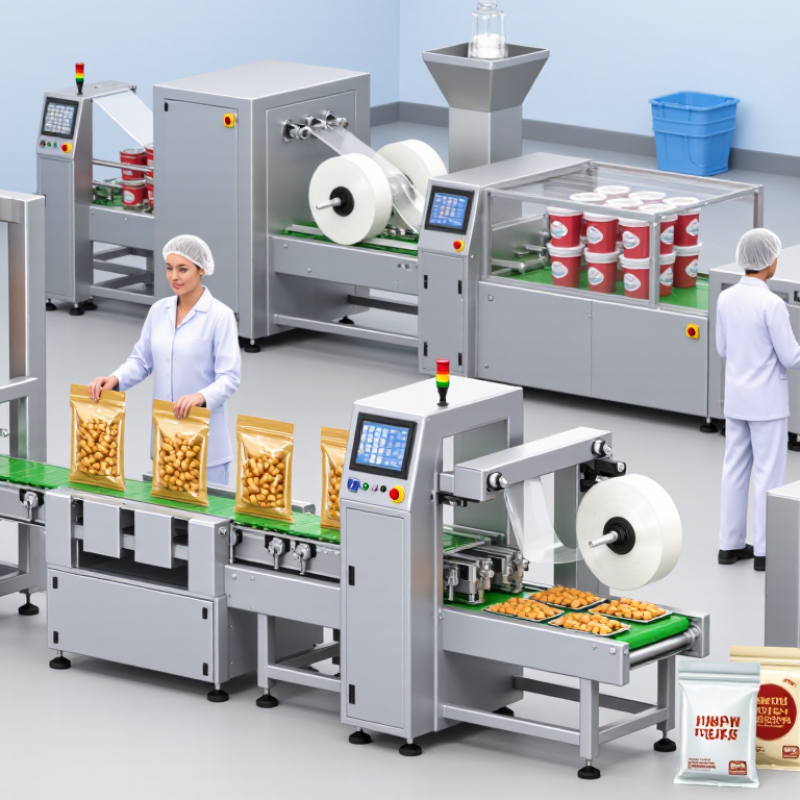
The package should guide the machine choice. Form-fill-seal equipment creates bags from a roll of film, fills them, and seals them in one sequence. It can suit powders, grains, snacks, and liquids when the film and sealing method match the product. Check how the machine handles dust, oil, or heat-sensitive ingredients. A few crumbs across the seal can cause leaks. Small details matter.
Premade-pouch machines fill and close bags that arrive already formed. They work well when a pouch needs a shaped bottom, zipper, or printed design. Operators load pouches into a magazine, so pouch stiffness and dimensions affect feeding. Ask for trials using the actual pouch and product. A sample that runs smoothly once may behave differently during a long shift. Changeovers can also take time.
Cartoning equipment places filled packs, trays, or bottles into cartons. It is often a secondary packaging step, not a replacement for the filling machine. Choose it when cartons protect products, organize several units, or support shelf display. Match carton size to the product and check how easily blanks erect and close. Watch for jams at bends and glue points. The best choice depends on package format, product behavior, cleaning needs, and the line’s available space. Some trade-offs only become clear after a realistic production test.
Verify Food-Contact Compliance with EU Regulation 1935/2004 and FDA 21 CFR Parts 174–178
Before choosing a food packaging machine, map every surface that may touch food. Check the filling nozzle, hopper, belt, seals, tubing, and coatings. Small parts matter. A gasket can contact hot sauce for hours, while a conveyor may touch chilled bread briefly. Ask what each component is made from and whether its documentation covers your actual food, temperature, and contact time.
For the EU market, assess food-contact materials against Regulation (EC) No 1935/2004. It requires materials to be sufficiently inert so they do not endanger health, unacceptably change food, or impair its taste or smell. In the United States, review applicable provisions in FDA 21 CFR Parts 174–178. These rules address indirect food additives and specific conditions of use; they do not certify an entire machine. Request relevant declarations, specifications, and migration-test reports, where applicable.
Read the fine print. A document for a polymer may not cover a different grade, colorant, or cleaning temperature. Compare its stated conditions with your production plan, including repeated use and wash cycles. Keep records linked to component names and machine drawings, so replacements can be checked later. Paperwork can look complete, yet still miss a hose or seal. That gap deserves a careful question before installation.
Compare Rated Speed, Changeover Time, and OEE for the Complete Production Line
A food packaging machine’s rated speed is a starting point, not a line forecast. A filler rated at 120 packs per minute cannot deliver that rate if the checkweigher or case packer handles only 90. Compare sustained speeds across the full line, using the same product, pack format, and operating conditions. Then ask suppliers for production-trial data, not only brochure figures. A brief test can miss jams, film breaks, and small stoppages.
Changeover time can matter more than peak speed when products change often. Measure from the last good pack of one format to the first good pack of the next. Include cleaning, film threading, recipe changes, and checks. The Lean Enterprise Institute describes SMED as reducing changeovers to under 10 minutes, but that is a method target, not a promise for every food line. Watch an actual changeover with your operators. The awkward steps are revealing.
Track OEE across the complete production line: availability × performance × quality. Vorne’s OEE reference guide cites 85% as a world-class benchmark, not a realistic starting guarantee for every plant. Compare the same shift length and product mix before judging machines. For example, a faster wrapper may add little if upstream supply is uneven or rejects rise. Ask for good packs per scheduled hour, changeover records, and downtime reasons. Numbers need context. A supplier’s test may not match your floor, and that deserves a second look.
How to Choose the Right Food Packaging Machine
Compare rated speed, changeover time, and OEE across the complete production line.
Illustrative planning values only. Rated speed is the machine’s nominal capacity; actual throughput depends on the full line and product. OEE reflects availability, performance, and quality, while changeover time varies with product, tooling, and cleaning requirements. Assess all three measures together before selecting a line.