

How to Source the Best Cat Treats for Your Business?
Sourcing the best Cat Treats for your business requires more than comparing prices and attractive packaging. It demands careful supplier research, ingredient knowledge, and practical testing. A dependable supplier should provide clear specifications, batch records, ingredient lists, and certificates of analysis when appropriate. These documents help verify composition, moisture levels, allergens, and microbiological safety. They also support traceability if a quality concern appears later.
Taste matters, but cats can be unpredictable. A salmon-flavored treat may attract one cat and disappoint another. Test small samples with different age groups, sizes, and dietary needs. Observe texture, smell, portion size, and packaging convenience. Keep written feedback, even when it seems minor. A crumbly treat can create messes in retail displays and delivery boxes. A strong odor may affect customer acceptance.
Responsible sourcing also means checking manufacturing standards and applicable market requirements. Ask how suppliers manage recalls, storage conditions, shelf life, and changes in formulation. Independent laboratory testing may add cost, yet it can reduce uncertainty. Do not rely only on polished sales claims. Request evidence. Review supplier communication speed and honesty when something goes wrong.
This process is not perfectly predictable. Some promising samples fail after transport or storage. That is useful information, not wasted effort. Build relationships with suppliers who welcome questions and correct weaknesses. The strongest Cat Treats range balances feline appeal, consistent quality, responsible production, and realistic business margins. A thoughtful sourcing plan protects customers, supports brand credibility, and gives your business room to improve.
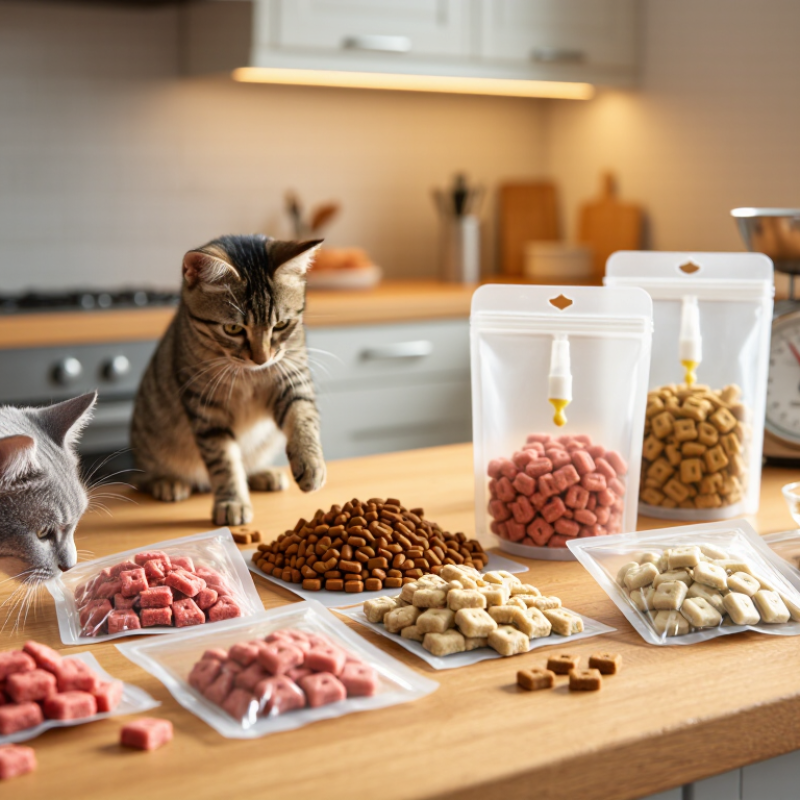
Define Your Business Needs and Target Cat Treat Customers
Before sourcing cat treats, define what your business can genuinely support. A premium pet shop may need single-protein recipes, recyclable packaging, and higher price points. A neighborhood store may prioritize familiar flavors, smaller bags, and steady wholesale margins. Write these needs down. Do not rely on assumptions.
Then describe your target customers in practical detail. Are they owners of senior cats, indoor cats, or animals with sensitive digestion? Some buyers prefer soft treats for older cats. Others want crunchy textures that support daily feeding routines. Ask customers about ingredient concerns, package sizes, and acceptable prices. Short surveys and sales records can reveal more than personal opinions.
Evaluate suppliers against those customer expectations. Request ingredient lists, nutritional information, shelf-life details, batch records, and clear storage instructions. Review sample treats for smell, texture, crumbs, and package durability. A treat that looks attractive may still create waste if the pouch tears easily. Check whether the supplier can maintain consistent quality during larger orders. Keep written notes from every sample test. This improves purchasing decisions and strengthens supplier discussions.
Your first customer profile may be incomplete. That is normal. I once might overvalue attractive packaging and overlook portion size. Recheck the profile after several weeks of sales. Compare repeat purchases with customer feedback, then adjust your product range carefully.
Research Cat Treat Ingredients, Nutrition, and Safety Standards
Choosing the best cat treats begins with careful ingredient research, not attractive packaging. Ask suppliers for full ingredient lists, product specifications, and batch records. Look for clearly named proteins, such as chicken, salmon, or rabbit. Avoid vague descriptions like “meat derivatives” when details are unavailable.
Check for unnecessary sugars, excessive salt, artificial colors, and ingredients that may burden sensitive cats. Treats should complement a complete diet, not replace it. Compare calorie content per piece, especially for indoor or overweight cats. A small biscuit can still contain significant energy.
Nutritional claims should match recognized pet-food standards and applicable national regulations. Ask a qualified animal nutritionist to review unusual formulas.
Safety evidence matters.
Reliable suppliers should explain their manufacturing controls, allergen management, and storage conditions. Request testing for harmful microorganisms, heavy metals, and chemical contaminants through competent laboratories. Review expiration dates and packaging seals carefully. A hazard-control system, traceable batches, and written recall procedures show professional responsibility.
I would also test texture, smell, and acceptance with supervised feeding trials. Record whether cats reject hard treats or develop digestive changes. Palatability is useful evidence, but it is not proof of nutritional quality. My own sourcing reviews have sometimes focused too heavily on ingredient appeal. That was a mistake. Supplier transparency, independent testing, and consistent batch performance deserve equal attention. Keep samples from every shipment for comparison when concerns appear.
Evaluate Suppliers, Manufacturing Quality, and Product Certifications
How to Source the Best Cat Treats for Your Business?
The 2024 APPA report valued U.S. pet industry spending at $147 billion in 2023. Treats remain a practical growth category, but supplier selection needs evidence beyond attractive packaging. Request facility audit records, ingredient specifications, allergen controls, and recent certificates of analysis. Test results should cover moisture, microbial safety, contaminants, and declared nutrients. A reliable supplier can explain every production step, from receiving poultry or fish to sealing the final pouch.
Manufacturing quality also depends on traceability. Ask for lot codes, retention-sample procedures, recall simulations, and documented corrective actions. Certifications such as ISO 22000, FSSC 22000, or BRCGS can support confidence, but certificates do not guarantee every batch. Check their scope, expiry date, auditing body, and covered facility. Verify compliance with applicable feed-safety rules, including preventive-control requirements where relevant. The FDA’s 2022 report on pet food recalls shows why documented controls matter, especially for contamination risks. Product claims need careful review, too. An AAFCO nutritional statement may support labeling, but treats are not automatically complete diets. I would also compare three production batches before signing a long contract. One impressive sample can mislead. Supplier communication after a failed test is often more revealing than a polished sales presentation.
| Evaluation Dimension | What to Evaluate | Weight | Reference Score | ||
|---|---|---|---|---|---|
| Ingredient Safety | Ingredient identity, origin, freshness, and suitability for cats | Clear ingredient specifications; animal-derived ingredients identified by source and processing method; no undeclared ingredients or prohibited substances. | Approved-ingredient list, specifications, supplier approval procedure, certificates of analysis, and allergen declaration. | 15% | 5 / 5 |
| Nutritional Control | Guaranteed analysis and nutritional consistency | Product documentation states crude protein, crude fat, crude fiber, and moisture; nutritional claims are supported by test results and are appropriate for a complementary pet food. | Product specification, laboratory reports, feeding or usage instructions, and label artwork for the target market. | 10% | 5 / 5 |
| Manufacturing Hygiene | Sanitation, pest control, personnel hygiene, and process controls | Documented prerequisite programs and HACCP-based hazard controls; production areas are separated according to raw-material and finished-product risks. | Recent third-party audit report, sanitation records, pest-control records, employee-training logs, and corrective-action reports. | 15% | 5 / 5 |
| Food-Safety Management | Formal food-safety management system | Current certification to a recognized food-safety management standard, such as ISO 22000 or a GFSI-recognized scheme, where applicable to the facility and product scope. | Valid certificate, certification scope, issuing-body details, expiry date, and latest surveillance or recertification status. | 15% | 5 / 5 |
| Laboratory Testing | Microbiological, chemical, and contaminant testing | Risk-based testing plan covering relevant pathogens, mycotoxins, heavy metals, pesticide residues, and oxidation indicators when relevant to the formula. | Batch-specific certificates of analysis, laboratory accreditation details, test methods, sampling plan, and release criteria. | 15% | 5 / 5 |
| Traceability and Recall | Ability to track materials and finished products | Each production lot can be traced from incoming ingredients through processing, packaging, shipment, and customer records; a documented recall procedure is tested periodically. | Lot-coding format, one-step-forward and one-step-back traceability records, mock-recall results, and retention-period policy. | 10% | 5 / 5 |
| Packaging and Shelf Life | Barrier performance, seal integrity, storage, and expiry dating | Packaging protects the product from moisture, oxygen, light, and contamination as required; shelf-life claims are supported by stability or real-time storage data. | Packaging specification, seal-strength checks, migration or suitability documentation where required, storage conditions, and shelf-life study. | 10% | 4 / 5 |
| Regulatory Compliance | Compliance with the destination market | Labels, claims, ingredients, feeding instructions, and facility registrations meet the rules of the destination country; registration is not treated as product certification unless legally defined as such. | Market-specific label review, regulatory declaration, facility registration details where required, import documents, and product dossier. | 10% | 5 / 5 |
| Commercial Reliability | Minimum order quantity, lead time, capacity, and communication | Written production capacity, predictable lead times, agreed quality tolerances, transparent minimum order quantities, and a defined process for handling deviations. | Quotation, production schedule, service-level terms, sample approval record, capacity statement, and customer complaint procedure. | 10% | 4 / 5 |
Compare Pricing, Minimum Orders, Packaging, and Delivery Options
Sourcing cat treats starts with a clear cost model, not the lowest quoted price. In my purchasing work, I compare unit price, freight, customs charges, and expected waste. A cheap pouch can become expensive when damaged seals increase returns. Ask for a complete quotation in the same currency and delivery terms. Then calculate the landed cost per sellable pack. Keep it practical. Request samples from each serious supplier. Check smell, texture, label accuracy, and batch consistency. Record findings with dates and photos. My first comparison was too optimistic; I ignored storage losses. That mistake changed my checklist.
Minimum order quantity can shape cash flow more than price. A supplier may offer a lower unit rate but require several thousand packs. Test whether your warehouse can move that volume before freshness becomes a concern. Negotiate mixed flavors, staged shipments, or a smaller pilot order. Written terms matter. Confirm lead times, reorder quantities, payment milestones, and responses to production delays. Do not rely on a friendly message alone. It is not a contract.
Packaging should protect the treat and fit your sales channel. Resealable bags need strong zippers, readable batch codes, and cartons that survive stacking. Ask whether inner packs need extra protection during humid or cold delivery. Inspect one carton after transport, not only at arrival. Compare delivery choices carefully. Air freight may save time but reduce margins, while ocean or ground service needs more planning. Request tracking, insurance details, temperature guidance, and a realistic delivery range. I still allow buffer days. Perfect logistics exist mostly in quotations.
Test, Select, and Regularly Review Your Cat Treat Suppliers
How to Source the Best Cat Treats for Your Business?
The cat treat market rewards careful sourcing, not attractive packaging alone. Grand View Research valued the global pet treats market at approximately $10.8 billion in 2022. It also forecasts a 7.6% compound annual growth rate through 2030. That growth increases supplier choice, but it also increases quality risks.
Test suppliers before placing large orders. Request ingredient specifications, allergen controls, certificates of analysis, and batch traceability records. Independent laboratories should verify moisture, microbial safety, and nutritional claims. Evaluate samples with a consistent panel of cats, observing aroma, texture, acceptance, and digestive tolerance. Keep notes beside each sample. Small details matter, including broken pieces and oily residue inside the pouch.
Do not select a supplier from one successful shipment. Review delivery accuracy, complaint rates, test results, and packaging performance quarterly. The American Pet Products Association reported US pet industry sales of $152 billion in 2024, showing how competitive this category has become. Suppliers should explain corrective actions clearly when results change. A practical weakness is relying too heavily on documents. Documents can look complete while warehouse handling remains poor. Conduct occasional site audits and request fresh samples from later batches. My checklist is useful, but not perfect. Customer feedback may reveal problems laboratory tests miss.
How to Source the Best Cat Treats for Your Business?
Test, select, and regularly review cat treat suppliers using a structured scorecard focused on food safety, traceability, product consistency, and supply reliability.
How to use this scorecard: Prioritize food safety and ingredient traceability first, then validate palatability and batch consistency with product tests. Review supplier performance regularly using documentation, delivery records, complaints, and quality-control results.
