

Why Are Airport Fences Important for Security and Safety?
Airport security is a pressing concern in today's world. An effective airport fence plays a vital role in this scenario. It acts as the first line of defense against unauthorized access. Proper fencing ensures that only authorized personnel and passengers enter the boarding areas.
In addition to preventing trespassing, airport fences provide safety. They protect against wildlife intrusions that can disrupt flight operations. The design and height of an airport fence are crucial in maintaining security. A strong fence can deter threats, but it is not foolproof. There are instances where gaps or flaws are not addressed. This can lead to potential risks that must be continuously monitored.
Overall, the significance of an airport fence cannot be understated. As technology evolves, so do the techniques used to breach security. Therefore, regular assessments of fence integrity and surrounding areas are essential. Addressing weaknesses can enhance safety and maintain trust in airport operations.
Importance of Airport Fences in Enhancing Security Measures
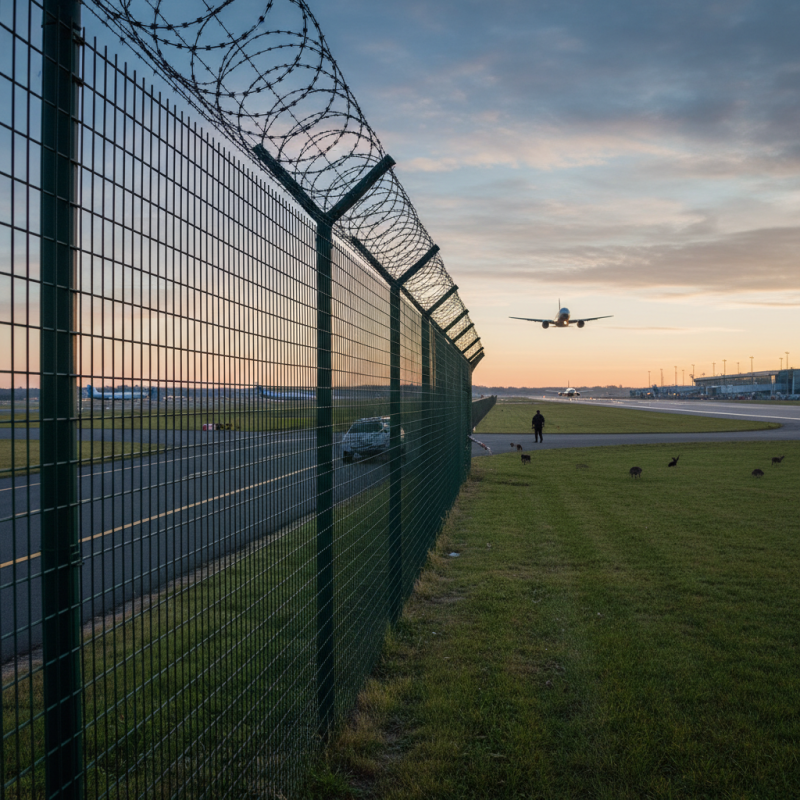
Airport fences play a critical role in enhancing security measures. They act as the first line of defense against unauthorized access. These barriers prevent intruders from wandering into sensitive areas. A well-constructed fence can deter potential threats.
The design and height of airport fences vary. Some are tall with barbed wire at the top, making climbing difficult. Others have surveillance systems integrated alongside them. Regular maintenance is essential to ensure they remain effective. If a fence is damaged, vulnerabilities arise. This can lead to serious security risks.
While fences are important, they are not foolproof. Determined individuals may find ways to breach them. This highlights the need for a multi-layered security approach. Constant evaluation of fencing effectiveness is necessary. Relying solely on fences may lead to complacency. Enhanced training for security personnel remains crucial. This ensures quick responses to any breaches. These measures combined can significantly improve airport safety.
Types of Airport Fences and Their Specific Security Features
Airport fences play a crucial role in maintaining security and safety. Various types of fences serve different purposes. For instance, chain-link fences are common. They are cost-effective and allow visibility. However, they often lack sturdiness against serious threats.
Another type is the steel palisade fence. This design provides enhanced protection. Its sharp tops deter climbing. Yet, these fences can be more expensive. Some airports opt for electric fences, integrated with alarms. These systems detect any breaches. But, they require regular maintenance and can fail sometimes.
Barbed wire is also seen atop fences. It adds another layer of defense. Still, it may not be the most humane option. Airports must balance security needs with public perception. Overall, selecting the right type of fence requires careful consideration of specific security features and vulnerabilities.
Why Are Airport Fences Important for Security and Safety? - Types of Airport Fences and Their Specific Security Features
| Type of Airport Fence | Height (feet) | Material | Security Features | Cost per Linear Foot ($) |
|---|---|---|---|---|
| Chain Link Fence | 8 | Galvanized Steel | CCTV, Barbed Wire | 15 |
| Welded Wire Fence | 10 | Steel Wire | Anti-Climb Features | 20 |
| Electric Fence | 8-10 | Various Materials | Shock Induction, Motion Sensors | 30 |
| Privacy Fence | 12 | Vinyl | Visual Barrier | 25 |
| Bulletproof Fence | 10-12 | Composite Materials | High Level of Protection | 50 |
Role of Airport Fences in Preventing Unauthorized Access
Airport fences play a crucial role in preventing unauthorized access. According to industry reports, over 1,000 incidents of trespassing occur at airports each year. These breaches can pose significant risks, not only to aircraft security but also to public safety. A well-designed fence acts as the first line of defense, deterring intruders who might threaten operations.
Visibility is essential for effective security. Fences should be high enough to discourage climbing but also allow surveillance by security personnel. A study found that airports with robust fencing systems see a 60% reduction in trespassing incidents. However, vulnerabilities like gaps in the fence or the lack of proper lighting can undermine this effectiveness.
Despite their importance, some airport operators overlook maintenance. Broken sections or overgrown vegetation can create easy access points. Regular inspections and upgrades are necessary but often neglected due to budget constraints. Ignoring these issues may lead to severe consequences during critical operations. A secure perimeter cannot be achieved without continuous effort and attention to detail.
Impact of Airport Fences on Wildlife Management and Safety
Airport fences play a vital role in wildlife management, affecting both safety and ecosystem balance. They serve as barriers, preventing animals from entering runways. However, not all fences are foolproof. Animals may still find ways to breach these barriers. For instance, small mammals and birds often slip through gaps. This creates potential hazards for aircraft.
Moreover, while fences aim to protect both wildlife and passengers, they can unintentionally disrupt local habitats. An increase in wildlife populations near airport boundaries can lead to overcrowding. This situation may attract more animals looking for food. It’s a complex balance needing ongoing attention. Persistent monitoring is crucial to prevent wildlife-related incidents.
In many cases, wildlife behavior adapts to the presence of fences. Animals may become bolder, exploring new opportunities near airports. This adaptability can pose risks, highlighting the need for better fence designs. Innovative solutions are imperative to enhance safety and ensure wildlife remains undisturbed. There’s no perfect system, and constant evaluation is essential for improving both airport security and ecological health.
Regulatory Standards and Compliance for Airport Fencing Systems
Airport fencing systems play a crucial role in ensuring security and safety. Regulatory standards dictate the design, height, and materials used. Compliance with these standards is vital. They help protect airport perimeters from unauthorized access and potential threats. However, not all airports adhere strictly to these regulations. Some might cut corners to save costs, leaving vulnerabilities.
Proper fencing must withstand various environmental factors. Strong winds, heavy rain, and extreme temperatures should not compromise its integrity. Regular maintenance is essential to check for any damages. Yet, many airports often neglect this aspect. A worn-out fence can easily become an entry point for intruders. This negligence raises serious concerns about airport security.
Awareness of evolving threats is another challenge. Airports need to modify their fencing systems accordingly. Advanced technologies, such as motion detectors and surveillance cameras, should complement physical barriers. But the integration of technology can be complex and costly. Not every facility invests adequately in these upgrades. Balancing costs and security remains a persistent dilemma.
