

7 Tips for Buying Fluted Coupe Glasses
Fluted Coupe Glasses bring a distinctive shape to a table, but appearance is only one part of a good purchase. Their ridged bowls catch the light, while wide rims make cocktails and sparkling drinks easy to serve. Still, a striking silhouette can hide practical drawbacks. A coupe that feels elegant in a product photo may be too delicate, heavy, or awkward to hold.
Choosing well means looking closely at details that are easy to overlook. Consider the glass capacity, stem balance, rim finish, and how securely each piece sits in your hand. Check the listed dimensions, not just the volume; two glasses with similar capacities can feel surprisingly different. Also review the manufacturer’s care instructions and return policy, especially when buying a set online. Small details matter.
Price deserves context, too. Handmade finishes, thicker glass, and well-balanced stems may affect cost, but a higher price alone does not guarantee better quality. Product descriptions and customer photos can help, though neither tells the whole story. Think about where the glasses will be stored, how often they will be used, and whether they need to suit more than one drink. That part is easy to misjudge. The following tips offer a practical way to compare Fluted Coupe Glasses, weigh style against everyday handling, and choose a set that fits your space, budget, and serving habits. A little hesitation is sensible. After all, the best-looking glass is not always the one you reach for most.
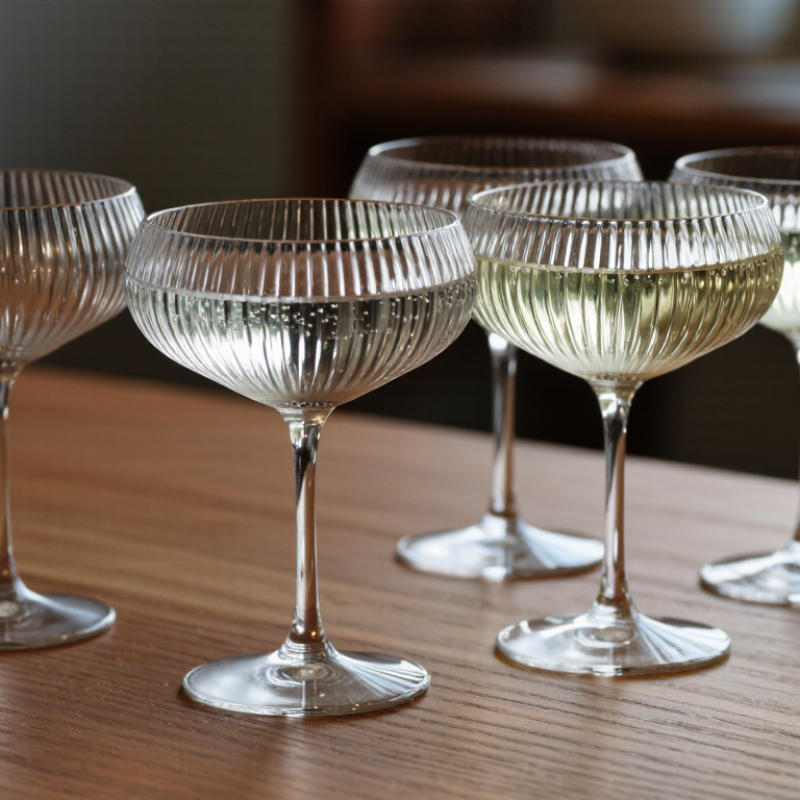
Understand Fluted Coupe Shapes, Styles, and Materials
Fluted coupe glasses pair a shallow, wide bowl with a stem, but the bowl’s depth and curve change how a drink looks and feels. A broad, shallow shape suits sparkling cocktails and gives aromas room to open; a deeper bowl offers a little more capacity and helps limit spills. Fluting adds vertical ridges that catch light and give fingers a subtle grip. Small detail. Big effect. Check that the rim feels smooth and the glass sits steadily on a table. The stem-to-bowl join deserves a look, too; it can feel delicate.
Style and material shape everyday use. Clear glass shows off a drink’s color, while tinted or textured glass creates a softer, less formal look. Soda-lime glass is common and practical; lead-free crystal can offer extra brilliance, though thin rims may need gentler handling. Grand View Research’s 2023 Glass Tableware Market report estimated the global market at about $10.9 billion in 2022 and projected 4.6% annual growth through 2030. That broad market estimate is not specific to coupe glasses, but it suggests sustained interest in glass tableware. Forecasts are still forecasts. For a useful comparison, check capacity, weight, rim thickness, and care instructions, not appearance alone. A beautiful coupe that feels awkward in your hand may stay in the cupboard.
Choose a Bowl Capacity and Rim Width for Your Drinks
Tip: Choose bowl capacity around the amount you plan to serve, not the glass’s brim-full measurement. A coupe listed at 250 milliliters may feel much smaller once you leave space for a garnish and prevent spills. For a short cocktail, a modest bowl can keep the drink looking balanced. For a larger pour with ice-free mixers, check that the usable space is sufficient. Leave room.
Tip: Pay attention to rim width as well as bowl shape. A wider opening can make aromas easier to notice, while a narrower rim may guide each sip more directly. Fluted sides add visual texture, but they do not determine how the glass feels at your lips. If possible, hold the glass before buying. A rim that looks elegant online might feel broad or awkward in your hand.
Tip: Match both measurements to your usual drinks. For sparkling cocktails, a smaller pour and comfortable rim can make serving easier; for aromatic drinks, you may prefer more room at the top. Compare the listed capacity with a measuring cup at home, then picture your typical garnish inside the bowl. It sounds fussy. I still find this check useful, though the perfect size can depend on the drink and the person pouring it.
Check Glass Clarity, Fluting, and Overall Craftsmanship
Hold a fluted coupe against a window and inspect it in daylight. Clear glass should look even, without cloudy patches, trapped bubbles, or scratches near the rim. Rotate the bowl slowly. The vertical ribs should repeat at regular intervals, then meet the stem cleanly. Small handmade variations can add character, but a wobbly foot or sharp rim is a practical concern.
Tips: Run a fingertip gently around the rim; it should feel smooth, not nicked. Set the glass on a flat surface and check for rocking. Compare two glasses side by side: uneven fluting is easier to spot that way. I sometimes overlook a slightly off-center stem at first, so check from above too.
For market context, the International Organisation of Vine and Wine’s State of the World Vine and Wine Sector 2024 report estimated global wine consumption at 221 million hectolitres in 2023, down 2.6% from 2022. That figure does not measure glass quality, but it underscores why a comfortable, well-finished glass matters for serving wine. Check the bowl’s weight in your hand, too. A coupe that feels elegant on a shelf may feel awkward when filled.
Assess Stem Comfort, Balance, and Base Stability
A coupe can look elegant and still feel awkward after a few minutes. Hold it by the stem, then mimic lifting it for a small sip. Your fingers should meet the stem without pinching, and the bowl should stay clear of your knuckles. Check the transition from stem to bowl, too. A sharp join can feel uncomfortable, especially when the glass is full. Try it with water before buying a set.
Balance matters more than a dramatic silhouette. Set the empty glass on a level counter and nudge the table lightly; watch for wobbling or a base that rocks. Then add water to your usual serving level and lift it again. The drink should not pull the bowl noticeably off-center. ISO 3591:1977, a wine-glass standard for sensory analysis, specifies a 215 mL capacity and 155 mm overall height for its reference glass. That is not a coupe requirement, but it offers a useful scale reference when comparing proportions.
Inspect the base from the side. A broad, flat foot usually feels steadier, while a narrow foot may tip more readily on a crowded tray. Still, width alone is not proof of stability; uneven glass or a crooked stem can undo it. Look across the foot for rocking, and check that the stem appears centered. Small flaws happen. One coupe I would reconsider is the prettiest one that feels tense to carry.
Compare Care Requirements, Durability, and Price
Fluted coupe glasses look delicate, but their care requirements can vary widely. Deep grooves may trap lipstick, sugar, or dried cocktail foam, so check whether the glasses are dishwasher-safe. Hand-washing is gentler, especially for thin rims and narrow stems. Use a soft sponge and warm, soapy water; abrasive pads can dull the finish. Dry each glass with a lint-free cloth to prevent water spots. Small chore, noticeable difference.
Durability depends on more than appearance. Thicker glass often handles everyday use better, while very fine bowls can feel elegant but chip more easily. Flutes also create extra edges where knocks may cause damage. Compare the bowl, stem, and base, and look for a stable foot that sits flat on the table. If possible, hold one before buying. A low price is less appealing if replacements are hard to find.
Price should reflect how often you’ll use the set and how carefully you can store it. Higher-priced glasses may offer better balance or clearer glass, but price alone does not guarantee strength. Check care instructions and replacement policies before committing. I might still choose a fragile pair for occasional dinners, though that choice deserves a second thought if cupboard space is tight. One broken stem changes the calculation.
| Tip | What to Compare | Care Requirements | Durability Considerations | Typical Price per Glass (USD) |
|---|---|---|---|---|
| 1. Choose the glass material | Soda-lime glass is a common, affordable choice; lead-free crystal is often clearer and may feel lighter or finer. | Follow the maker’s instructions. Hand washing is a cautious choice for fine or delicate crystal. | Neither material is unbreakable. Thicker, heavier everyday glass may better tolerate routine handling than thin, delicate glass. | About $3–$10 for common glass; about $8–$25 for lead-free crystal. |
| 2. Check the capacity | Many coupes hold roughly 6–10 fl oz (180–300 ml). Compare usable serving volume, not just the glass’s total capacity. | Larger bowls can need more space in the sink or dishwasher; check dimensions against your storage and cleaning setup. | A wider bowl can be more exposed to knocks. Consider how the glasses will be carried and stored. | Commonly about $4–$20, depending on material, construction, and set size. |
| 3. Inspect the stem and bowl joint | Look for a straight stem, an even join, and a base that sits flat. Compare the feel and balance of each glass if possible. | When hand washing, hold the bowl and stem gently rather than twisting the bowl against the stem. | Stems and bowl-to-stem joints are vulnerable to impact and twisting. A stable base and well-finished join can improve everyday usability. | Often about $5–$25 per glass; handmade or fine crystal options may cost more. |
| 4. Examine the fluting | Check that the ridges are even and comfortable to hold. Deeper fluting creates a stronger textured look; subtle ribs are usually easier to wipe clean. | Ridges can collect drink residue. Rinse promptly and use a soft brush or cloth if needed. | Fluting does not make glass shatterproof. Check for rough edges, visible bubbles, or uneven finishing. | Typically about $4–$20 per glass, with price influenced by material and finish. |
| 5. Confirm dishwasher guidance | Check the product label or care instructions rather than assuming all glassware is dishwasher-safe. | If approved for a dishwasher, secure glasses so they do not touch. Hand washing can reduce the risk of chips and clouding for delicate pieces. | Repeated contact, heat, and detergent can damage some delicate glassware over time; suitability varies by product. | About $4–$20 per glass; dishwasher suitability alone does not determine price. |
| 6. Assess the rim and base | Look for a smooth, evenly finished rim and a level base. Check that the glass feels stable when placed on a flat surface. | Use a soft cloth when drying to avoid bumping the rim against hard surfaces. | Thin rims can feel refined but are more prone to chipping. A wider base may improve stability but does not prevent breakage. | Usually about $4–$25 per glass, depending on construction and material. |
| 7. Compare set value and replacements | Compare the total set price, number of glasses, shipping, and whether individual replacements are available. | Check whether the care instructions apply to every glass in the set, especially if pieces have different finishes. | Buying an extra glass or choosing a set with replacement availability can help if one breaks. | Common sets of 4–6 may cost about $20–$120 or more; compare the per-glass cost. |
Price ranges are approximate U.S. retail estimates and vary by retailer, set size, material, and season. Always check the care instructions for the specific glass.
