

Top 10 Bakery Paper Bag Suppliers for Global Buyers
Bakery Paper Bags may look simple on a counter, but the right choice depends on more than appearance. A warm loaf can release steam. A pastry may leave a faint oil mark. Bag dimensions, paper weight, closure style, and print quality all shape the customer’s experience. For global buyers, dependable supply matters just as much.
Ellen MacArthur’s circular-economy work emphasizes the principle, “Design out waste.” It offers a useful lens for comparing suppliers. Ask what paper grades are available, whether food-contact documentation can be provided, and how print samples are checked against production runs. Confirm minimum order quantities, lead times, packaging details, and options for custom sizes. Clear answers are more useful than broad promises.
This guide to the Top 10 Bakery Paper Bag Suppliers for Global Buyers is intended to help purchasing teams make those comparisons with care. A polished sample is a start, not proof of consistent performance. Request specifications and review them against your bakery’s actual products. Test the bag with a crusty baguette, a flaky pastry, and the labels you use every day. Small details matter. Supplier rankings can simplify the search, but they cannot replace your own checks. And sometimes, the best-looking option is not the best fit.
What Bakery Paper Bags Are and How Global Buyers Use Them
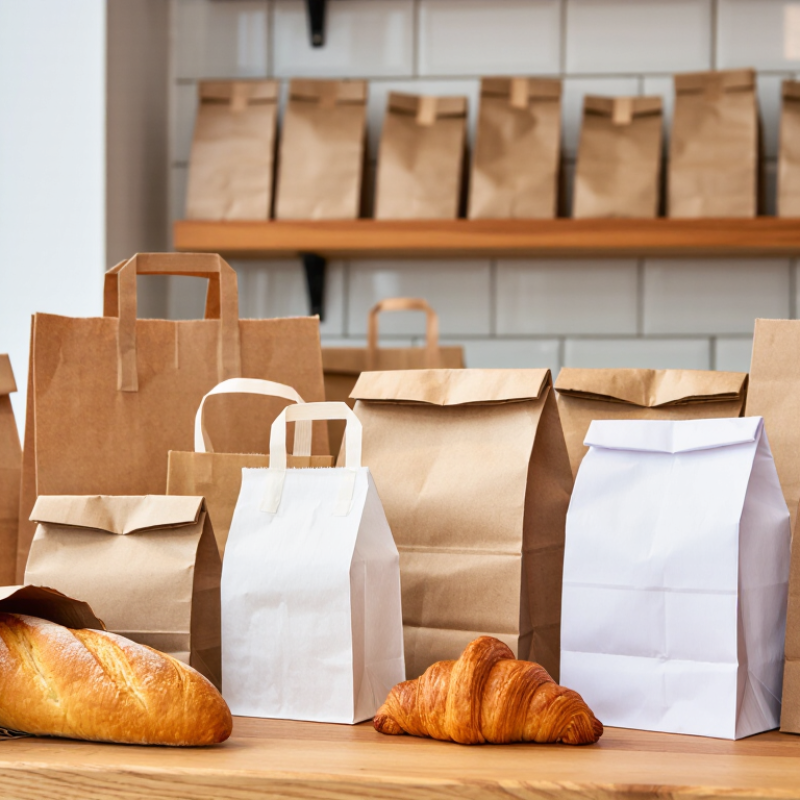
Bakery paper bags are lightweight paper packages used for bread, pastries, cookies, and other baked goods. They help contain crumbs and make products easier to carry, display, and hand to customers. Common formats include flat bags for rolls, gusseted bags for loaves, and handled bags for larger orders. Paper weight, bag dimensions, and opening width should match the product, not just the product photo. The details matter. A warm baguette may release moisture, while a buttery pastry can leave grease marks. Buyers should check whether the paper or any lining suits the intended food and serving conditions.
Global buyers use these bags across bakeries, cafés, grocery counters, and food-service operations. They often compare print options, packing quantities, carton sizes, and delivery schedules alongside appearance. For a practical evaluation, request samples and test them with real products: place a loaf inside, fold the top, and carry it for a short walk. Check for tearing, oil transfer, and whether the bag remains easy to open. A sample can look perfect and still disappoint during busy service. That happens. Confirming specifications in writing, including size tolerances and packaging details, can help reduce avoidable surprises between ordering and delivery.
Key Criteria for Evaluating Bakery Paper Bag Suppliers
Top 10 Bakery Paper Bag Suppliers for Global Buyers
Key Criteria for Evaluating Bakery Paper Bag Suppliers
Choosing a bakery bag supplier means checking more than price and appearance. Ask for paper weight, bag dimensions, handle strength, and grease-resistance details. Request samples filled with warm rolls or pastries, then check for leaks, tearing, and softened seams. Small details matter. Eurostat reports that paper and cardboard represented 40.8% of EU packaging waste in 2022, while packaging waste averaged 186.5 kilograms per person. These figures offer useful regional context, not proof of any supplier’s quality.
Check whether the supplier can provide food-contact documentation, consistent production records, and clear specifications for coatings or barriers. Ask how these materials affect local recycling options. Review sample consistency across batches, print alignment, minimum order quantities, lead times, and complaint handling. A polished sample can still hide production variation. Request a production sample when possible, and clarify how defects are measured before signing an order.
Top Bakery Paper Bag Suppliers Serving International Markets
For global bakery buyers, the strongest paper bag suppliers are not simply the ones offering the lowest unit price. They need reliable export schedules, consistent food-contact documentation, and bag samples that match the bakery’s actual products. A bag carrying warm croissants may need grease-resistant paper, a secure fold, and enough strength to prevent tearing during delivery. Ask suppliers to confirm paper weight, handle construction, print tolerances, and carton quantities in writing. Then test samples with real products. Details matter.
International orders also depend on practical checks: minimum order quantities, lead times, port options, and how defects are handled across borders. FAO forestry statistics put global paper and paperboard production at roughly 400 million tonnes in 2022, indicating a vast material supply chain—not guaranteed capacity for every order. Eurostat reported that paper and cardboard made up about 40.8% of EU packaging waste in 2022, useful context for buyers reviewing packaging choices. Still, a recyclable-material claim alone does not prove a finished bag is recyclable in every destination. Request specifications and destination-specific guidance. One trade-off is easy to overlook: heavier paper can improve durability, but it may raise shipping costs and material use. Supplier comparisons should include both.
Top 10 Bakery Paper Bag Suppliers for Global Buyers - Top Bakery Paper Bag Suppliers Serving International Markets
Comparison note: The entries below are anonymous, illustrative sourcing profiles by manufacturing market—not named companies or a verified ranking. Product availability, export experience, minimum order quantities, and certifications vary by supplier; confirm details directly before purchasing.
| No. | Supplier Profile | Common Bakery Bag Formats | Paper and Finish Options to Ask About | Printing Options to Confirm | Potential Buyer Fit | Checks Before Ordering |
|---|---|---|---|---|---|---|
| 1 | Paper packaging manufacturer in China | Flat bags, SOS bags, window bags, and handled takeaway bags | Unbleached kraft, white paper, grease-resistant grades, and window materials | Flexographic or other supplier-supported print methods; verify colors, artwork limits, and proofing process | Buyers comparing a broad assortment of packaging formats and custom options | Request product specifications, food-contact documentation for the intended use, samples, and a written quotation |
| 2 | Paper packaging manufacturer in India | Bakery counter bags, bread bags, pastry bags, and carry bags | Kraft and white paper; ask whether grease-resistant or windowed constructions are available | Confirm available print process, number of colors, artwork requirements, and production tolerances | Importers seeking paper packaging with options for custom sizes and printing | Check paper grade, bag dimensions, packaging method, lead time, and export paperwork |
| 3 | Paper bag converter in Turkey | Retail bakery bags, bread bags, and paper shopping bags | Kraft or white paper, with construction and finish depending on the converter's equipment | Ask for available print techniques, color matching, and printed samples | Buyers evaluating suppliers serving regional and international trade routes | Confirm destination-market requirements, shipping terms, production capacity, and sample approval procedure |
| 4 | Paper packaging manufacturer in Poland | Bakery counter bags, bread packaging, and paper carry bags | Ask about paper weight, recycled-content options, grease resistance, and any window construction | Verify print capabilities and whether artwork can be produced to the buyer's specifications | European buyers comparing regional manufacturing and supply options | Request applicable food-contact declarations, material details, and evidence for any environmental claims |
| 5 | Paper bag manufacturer in Germany | Bakery retail bags, bread bags, and takeaway paper bags | Paper grade, recycled content, and barrier features should be checked for each product | Ask about print process, color reproducibility, and minimum artwork requirements | Buyers prioritizing documented specifications and clear product compliance information | Check intended-use suitability, migration or food-contact documentation where applicable, and packaging specifications |
| 6 | Paper packaging converter in Italy | Pastry bags, bread bags, counter bags, and branded paper carry bags | Ask about kraft and white stocks, window options, and grease-resistant paper grades | Confirm print quality expectations, artwork setup, and approval of a production sample | Retail and bakery buyers seeking packaging choices for product presentation | Confirm bag dimensions, closure style, paper properties, order terms, and delivery schedule |
| 7 | Paper bag manufacturer in Spain | Bakery counter bags, bread packaging, and takeaway bags | Ask the supplier to specify paper type, weight, recycled content, and any grease-resistant treatment | Verify print options, artwork compatibility, and whether custom sizes are available | Buyers exploring European supply options for standard or customized bakery packaging | Request current technical data sheets and verify that claims match the supplied product |
| 8 | Paper packaging manufacturer in Vietnam | Flat bakery bags, SOS-style bags, and paper carry bags | Ask about kraft and white paper, window construction, and paper grades suited to the product | Confirm printing methods, artwork specifications, and sample availability | Importers comparing suppliers in Southeast Asia | Evaluate quality-control procedures, export experience, shipment terms, and production lead time |
| 9 | Paper bag converter in Indonesia | Retail bakery bags, bread bags, and paper takeaway packaging | Check paper composition, strength, grease resistance, and availability of windowed designs | Ask for details on print colors, repeat orders, and design approval | Buyers assessing Southeast Asian sourcing and regional shipment options | Request samples and product documentation; clarify order quantity, packing method, and shipping arrangements |
| 10 | Paper packaging manufacturer in the United States | Bakery counter bags, bread bags, pastry bags, and handled paper bags | Ask about available paper grades, recycled-content options, and grease-resistant constructions | Confirm custom-print services, artwork requirements, and repeat-order consistency | North American buyers comparing domestic sourcing with imported alternatives | Verify food-contact suitability for the intended application, specifications, order terms, and delivery coverage |
Comparing Suppliers by Materials, Customization, and Certifications
When comparing bakery paper bag suppliers, inspect the paper grade, basis weight, and food-contact documentation—not just the sample’s appearance. A thin kraft bag may suit croissants, while oily pastries often need a tested grease-resistant inner barrier. Ask whether the paper is virgin, recycled, or blended, and request batch-level specifications. Small details matter. FEFCO’s 2023 Key Statistics reports that recovered paper makes up about 89% of raw materials used in European corrugated packaging. That figure is a useful circularity benchmark, but it does not describe bakery bags specifically.
Customization should be practical: confirm handle strength, gusset width, print limits, and whether the bag stays upright on a crowded counter. Request a physical proof; colors can shift on uncoated kraft. For certification, check the certificate’s scope and validity, rather than relying on a logo alone. FSC or PEFC chain-of-custody documentation can support fiber-origin claims, while food-contact testing should match the intended use and destination market. Ask suppliers for test reports, ink details, and written declarations. Ask for proof. A common weak point is vague language such as “eco-friendly”; it tells buyers little about composition, performance, or end-of-life options.
Top 10 Bakery Paper Bag Suppliers for Global Buyers - Comparing Suppliers by Materials, Customization, and Certifications
This chart presents a suggested weighting framework for comparing supplier candidates. It is not a ranking or a set of verified performance scores for individual suppliers.
How to use it: Assess each candidate against the same criteria. Check material specifications and food-contact requirements, confirm customization capabilities, and request current documentation for any claimed certifications. Adjust the weights to match your sourcing priorities.
How to Choose and Source the Right Bakery Paper Bag Supplier
Choosing a bakery paper bag supplier starts with the product, not the lowest quote. Define bag dimensions, paper weight, handle style, and expected daily volume. A warm croissant can leave grease marks, while a crusty loaf needs room to breathe. Ask for samples in the exact size and paper grade you plan to order. Check seams, fold strength, print clarity, and how bags perform after filling. Small flaws show up fast.
Tips: Compare like with like. Request written specifications, sample lead times, minimum order quantities, and packing details. Confirm that paper and inks suit the intended food-contact use, and request relevant documentation for destination markets. Keep an approved reference sample.
For global sourcing, assess communication and production consistency alongside price. Ask how the supplier handles color variation, rejected batches, and schedule changes. Request recent production photos or inspection records, but treat them as supporting evidence, not a replacement for your own checks. Clarify carton counts, pallet dimensions, and shipment terms before confirming costs; freight can change the real unit price. A supplier may reply quickly yet miss a detail. That matters. Put agreed specifications and tolerances in the purchase order, then check the first shipment against them. A small pilot order costs more per bag. It may reveal issues before a large run.
