

China Top Food Grade Laminating Adhesive Suppliers?
Choosing a Food Grade Laminating Adhesive supplier is not just a purchasing decision. It can affect bond strength, odor, packaging performance, and confidence in the finished pack. The details matter: a seal on a pouch must hold through filling, transport, and storage. Small formulation differences can have visible consequences.
The scale of the food system makes dependable packaging important. FAO’s 2023 report on progress toward Sustainable Development Goal 12.3 estimated that 13.2% of food was lost after harvest and before retail in 2021. Packaging cannot solve food loss alone. Still, suitable materials can help protect products during distribution. Food-packaging scholar Dr. Gordon L. Robertson’s work offers a useful evaluation principle: assess packaging by how well it protects food quality across its intended use. This is a paraphrase of his published work, not a verbatim quotation.
This overview examines China’s leading supplier landscape through practical criteria: technical documentation, production consistency, application support, and experience with flexible packaging structures. Supplier claims deserve careful checking. A strong sample is encouraging, but it does not prove consistent performance at production scale. Buyers should also confirm that adhesive specifications match the intended substrate, process, and food-contact requirements in the destination market. Details count. No single supplier fits every converting line, and available public data may not support a definitive ranking. The aim here is a clearer shortlist—not an unsupported winner.
What Is Food-Grade Laminating Adhesive?
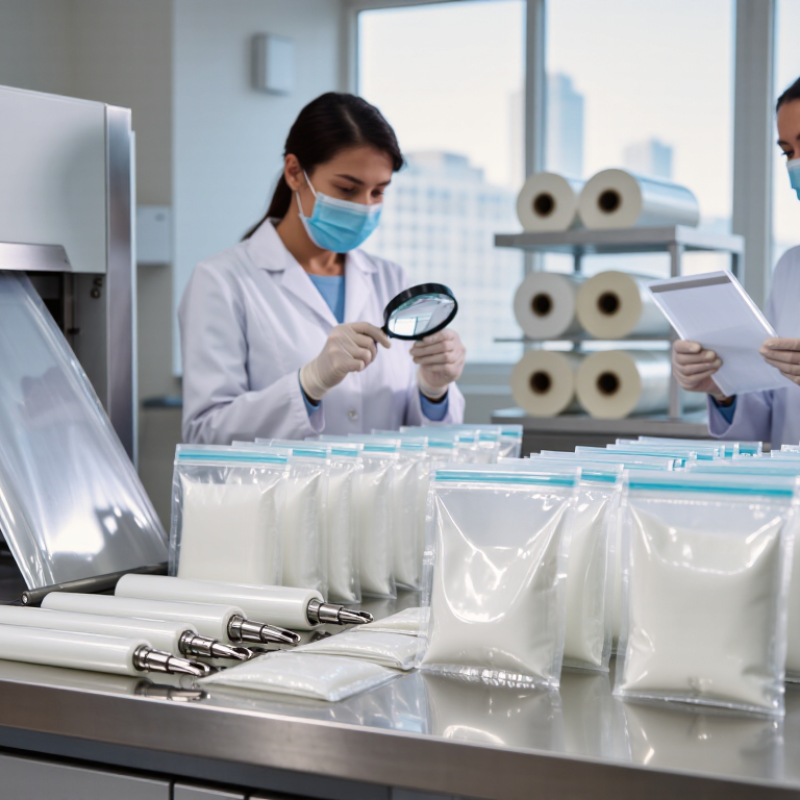
Food-grade laminating adhesive bonds layers such as printed film, plastic, and aluminum foil into flexible packaging. It usually sits between layers, not directly against the food. The finished package may protect contents from moisture, oxygen, or light. Each layer has a job.
“Food-grade” is not a magic guarantee. Suitability depends on the adhesive, the packaging structure, and the intended use. Hot soup, oily snacks, and refrigerated foods create different conditions. Storage time matters too. Adhesive must cure properly, and manufacturers should assess possible migration and residual substances in the finished laminate. Details matter.
When evaluating a supplier, ask for technical data, relevant test reports, curing guidance, and batch traceability. Check that documentation matches your specific film combination and food-contact conditions. Ask for evidence. A generic certificate may not answer every question. There is no universal recipe, and I would not rely on a datasheet alone. If the package changes, the assessment may need to change too. A small trial run can reveal practical issues, such as weak bonds, odor, or curling edges.
Where Are Food-Grade Laminating Adhesives Used?
Food-grade laminating adhesives are used to bond layers in flexible food packaging. A snack pouch may combine printed film, a barrier layer, and an inner sealable film. The adhesive helps these layers stay together during filling, transport, and opening. Similar structures package coffee, dried foods, frozen products, and powdered ingredients. Each product brings different demands. Coffee needs aroma protection, while frozen packs must tolerate cold handling without becoming brittle.
These adhesives also appear in lidding films and some sachets. They help laminated materials resist scuffing, moisture, or oxygen, depending on the package design. In most structures, the adhesive sits between packaging layers rather than touching the food directly. Still, suitability depends on the complete structure, curing conditions, and intended use. A label alone is not enough. Small changes in film thickness or production speed can affect bonding, so practical testing matters.
Tips: Ask suppliers for technical data and guidance on the exact packaging structure. Check bond strength after curing and under realistic storage conditions. A small wrinkle can matter. Teams sometimes overlook seal performance while focusing on lamination strength; both should be reviewed before production.
China Top Food Grade Laminating Adhesive Suppliers? - Where Are Food-Grade Laminating Adhesives Used?
| Food Packaging Application | Common Laminate Structure Examples | Typical Adhesive Type | Key Performance Needs | Important Selection Considerations |
|---|---|---|---|---|
| Snack foods and chips | BOPP / BOPP; PET / PE; metallized film / PE | Flexible-packaging polyurethane (PU), solvent-based or solvent-free | Bond strength, seal compatibility, and resistance to oils and handling stress | Confirm suitability for the food type, package structure, and any applicable migration requirements. |
| Coffee and dry powdered foods | PET / aluminum foil / PE; PET / metallized film / PE | PU laminating adhesive designed for the selected film and barrier structure | Reliable interlayer adhesion and protection of the package’s barrier layer | Foil and metallized layers require process and bond testing; adhesive selection alone does not determine package barrier performance. |
| Retort and shelf-stable meals | PET / aluminum foil / CPP; PA / aluminum foil / CPP | Retort-grade PU adhesive system | Adhesion retention and resistance to heat, moisture, and retort processing | The complete laminate must be validated under the intended retort conditions, including temperature, time, and contents. |
| Frozen foods | PET / PE; PA / PE; printed film / PE | PU adhesive formulated for flexible packaging and the intended service conditions | Bond integrity and flexibility during cold storage and distribution | Test the finished laminate after conditioning at the expected storage and handling temperatures. |
| Dairy products and liquid foods | PET / PE; printed film / PE; paper-based multilayer structures | PU for many flexible-film laminates; other systems may be used for specific paper or packaging processes | Adhesion suited to the substrate, product contact conditions, and converting process | Consider moisture exposure, product composition, filling conditions, and the package’s intended contact layer. |
| Confectionery and chocolate | BOPP / BOPP; PET / PE; metallized film / sealant film | Solvent-based or solvent-free PU, selected for the structure and production line | Consistent bonding, machinability, and compatibility with the required sealing process | Check performance with the actual films, inks, and sealing conditions used in production. |
| Paper-based food wrappers and cartons | Paper / film; paper / aluminum foil; paper / barrier coating | Water-based or other process-specific adhesive systems, depending on the substrates and construction | Adhesion to porous paper and compatibility with any film or barrier layer | Confirm that the adhesive and finished packaging are appropriate for the intended food-contact use. |
Note: “Food-grade” suitability depends on the adhesive formulation, laminate construction, manufacturing controls, intended food type, and applicable regulations in the destination market. Verify documentation and test the finished packaging for its intended use.
What Standards Should Suppliers Meet?
China’s food-grade laminating adhesive suppliers should show compliance with standards relevant to the intended packaging and market. For China, ask how the product meets GB 4806.15-2024, the national standard for adhesives used in food-contact materials and articles. Requirements may differ for products sold elsewhere, so check the rules of each destination market.
Look beyond a “food grade” label. Request current test reports, technical data, and written information on permitted uses, curing conditions, and restrictions. Migration testing should reflect the finished laminate, the food type, and likely storage time and temperature. A test on uncured adhesive alone may not describe real use. Ask for batch traceability and change-control records, too.
Details matter. Ask how long the adhesive must cure before conversion or shipment, and how residual substances are controlled. A glossy certificate is not enough. Compare report dates, sample descriptions, and test conditions with the material you plan to buy. Small gaps are easy to miss. Even experienced buyers should review them carefully.
How to Evaluate China-Based Laminating Adhesive Suppliers
When evaluating China-based food-grade laminating adhesive suppliers, start with evidence, not polished brochures. The Flexible Packaging Association’s 2024 State of the Flexible Packaging Industry report puts U.S. industry sales at $42.9 billion in 2023. That scale makes dependable converting materials important, but market growth alone says nothing about a supplier’s quality.
Ask for technical data sheets, batch traceability records, and food-contact documentation applicable to your intended markets and packaging use. Check whether migration testing reflects the actual film structure, adhesive coat weight, curing time, and food-contact conditions. A report for a different laminate may not answer your question. Look closely at cure schedules and bond-strength results; request test methods and recent batch records, not just a certificate. Details matter.
Then assess how the supplier handles production changes, complaints, and corrective actions. Request a trial lot and compare its peel strength, appearance, and odor after the stated curing period. Visit the plant if practical, or arrange an independent audit. A passing sample is useful, not conclusive. I would still leave room for doubt: one test cannot represent every production run, and overly demanding specifications can obscure the real packaging conditions. Verify the evidence against your own line before approving routine supply.
How to Verify a Supplier Before Placing an Order
China Top Food Grade Laminating Adhesive Suppliers?
A supplier’s “food-grade” claim is only a starting point. Ask for a current technical data sheet, safety data sheet, batch certificate, and written declaration covering your exact adhesive and intended food-contact use. Check that documents identify the product code, production site, and revision date. Then verify that the stated compliance applies in your destination market.
Flexible packaging is a large, fast-moving sector: MarketsandMarkets estimated its global market at USD 265.7 billion in 2023, with growth projected through 2028. Scale makes traceability important.
Request migration-test evidence for the finished laminate, not just the adhesive. Test conditions should match the food type, contact time, temperature, and curing period you expect in production. Ask who performed the tests, which methods were used, and whether results cover the proposed film, ink, and adhesive combination.
Check the supplier’s change-control process and complaint records, too. A polished certificate can still leave gaps. I would compare a recent production sample with the approved specification; small differences in odor, coat weight, or cure time deserve questions.
Tips: Request a sample from a normal production batch, not a specially prepared one. Confirm lead times, lot traceability, and retention-sample practices in writing. If an answer feels vague, pause. One overlooked detail can become a costly trial.
