What Are the Top Types of Thermal Paper Labels?
Thermal Paper Labels are a practical choice for receipts, shipping, retail pricing, and product identification. Direct thermal printers use heat to form an image on a treated surface, so they need no ink ribbon. That makes printing quick and simple. Yet the label’s coating, adhesive, and storage conditions affect how well it performs.
Common options include economical uncoated labels for short-term use, top-coated labels with added surface protection, and specialty-coated versions designed for moisture, oils, or colder environments. These are not interchangeable. A parcel label kept in a warm warehouse faces different demands from a chilled food package or a shelf tag handled all day. In practice, matching the label to the printer and application often matters more than choosing the most heavily coated option.
Some terminology can be confusing. Standard thermal paper is typically direct thermal, while thermal transfer printing uses a ribbon and a different label construction. The distinction can feel fussy. It is useful, though, when comparing product descriptions or troubleshooting faded text.
This guide looks at the leading types of Thermal Paper Labels, what their coatings offer, and where each is commonly used. It also notes practical trade-offs, such as print life, surface durability, and adhesive suitability. A careful match is rarely glamorous. It can prevent a smudged barcode, a peeling corner, or a label that becomes unreadable too soon.
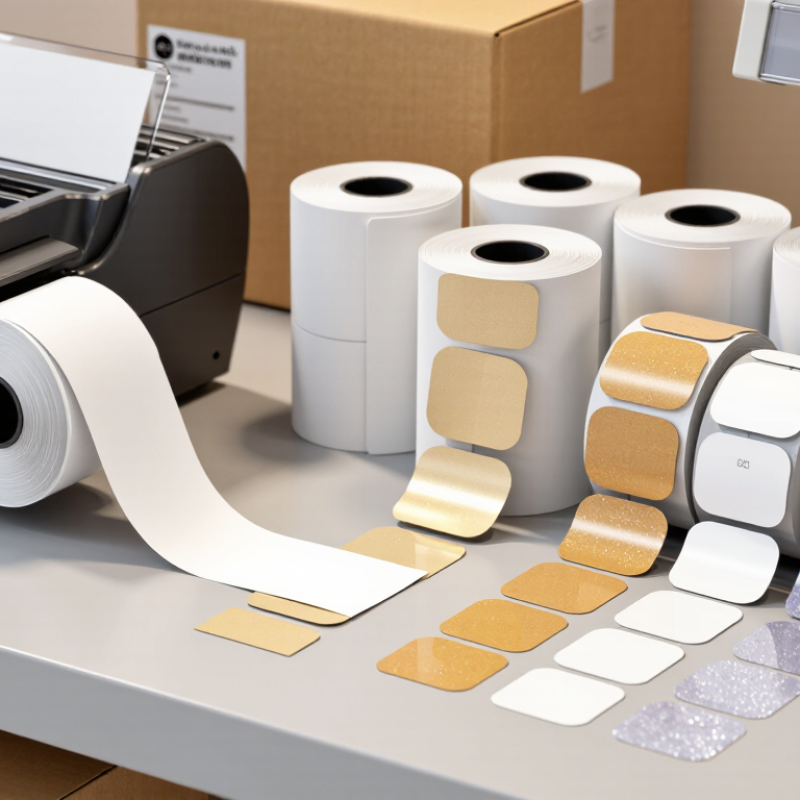
How Thermal Paper Labels Are Classified by Printing Method
Thermal paper labels are mainly classified by how the image is printed: direct thermal or thermal transfer. Direct thermal printers heat a coated label surface, creating text without an ink ribbon. No ribbon needed. This method suits short-life shipping labels, receipts, and chilled-food tags that move quickly through a warehouse. However, heat, sunlight, and abrasion can darken or fade the print.
Thermal transfer printing uses a heated printhead to transfer ink from a ribbon onto the label. It usually offers better resistance to handling and environmental exposure, especially when the face material and ribbon are correctly matched.
Grand View Research estimated the global thermal paper market at USD 4.3 billion in 2022, with a projected 5.2% compound annual growth rate from 2023 to 2030. That growth reflects broad use, not a guarantee that every label needs the same method.
A practical choice starts with the label’s working life. A parcel label used for days may need only direct thermal stock; a product identifier stored for months may benefit from thermal transfer. Test a sample under real conditions: rub it, expose it to light, and check it after refrigeration. Classification helps, but it is not perfect; adhesive, coating quality, and printer settings can change results as much as the method itself.
Direct Thermal Labels for Short-Term Use
Direct thermal labels suit tasks where printed information only needs to remain clear for a limited time. Their heat-sensitive coating darkens when it passes under a thermal printhead, so no ink ribbon is needed. This makes printing straightforward in busy packing areas, where staff may apply labels to cartons throughout a shift. The process is simple, but the printed image can fade.
Heat, sunlight, friction, and moisture can shorten a label’s useful life. A parcel left in a hot vehicle, for example, may show fading or dark marks before delivery. Direct thermal labels are often practical for shipping, temporary inventory tags, and short-term picking labels. They are less suitable when records must stay readable for months or when labels face frequent handling. That distinction is easy to miss.
Choose a label stock and adhesive that match the surface and conditions. A label that sticks well to a clean cardboard box may lift from a cold, dusty container. Test a small batch in the actual workflow, including storage and transport. Check whether the barcode still scans after rubbing or brief exposure to warmth. Results can vary, and one quick test may not reveal every problem.
Top-Coated Thermal Labels for Added Durability
Top-coated thermal labels have a clear protective layer over their heat-sensitive surface. It helps printed details resist everyday rubbing, handling, and light exposure to moisture or oils. This can matter on shipping cartons that slide across conveyor belts or storage bins touched throughout the day. Small barcodes stay easier to scan when their edges are less likely to smear.
The coating is not a guarantee against damage. Prolonged heat, direct sunlight, or harsh chemicals can still fade or affect a direct-thermal image. Limits matter. For chilled packages or warehouse shelves, match the label adhesive to the surface and expected temperature changes. A strong topcoat cannot compensate for a label that lifts at the corners. Test a sample on the actual container, then rub it gently and check whether the barcode still scans. It is easy to assume every “durable” label suits every setting; real handling can prove otherwise. A brief trial often reveals issues that a product description cannot.
Thermal Transfer Labels for Long-Lasting Printing
Thermal transfer labels suit products that need readable identification beyond the shipping stage. Heat from the printhead transfers ink from a ribbon onto the label face. Wax ribbons work for short-term paper labels; wax-resin blends offer better rub resistance, while resin ribbons are commonly paired with synthetic materials for demanding conditions. The match matters. A durable ribbon on unsuitable paper can still produce a label that smears or peels.
Test the finished label, not just the ribbon. ASTM D5264 describes a rub-resistance test for printed materials using repeated contact, helping compare abrasion performance under controlled conditions. GS1’s General Specifications use ISO/IEC 15416 barcode grades on a 0–4 scale; the required grade varies by application. A high initial grade does not guarantee readability after exposure to friction, moisture, cleaners, or sunlight. Small detail. Keep sample labels on the actual container and expose them to realistic handling before selecting a stock-and-ribbon combination. I would also check adhesion after temperature changes; that step is easy to miss. These tests provide useful evidence, but they do not predict every warehouse or product environment.
What Are the Top Types of Thermal Paper Labels? - Thermal Transfer Labels for Long-Lasting Printing
| Label Type | Printing Method | Ribbon Requirement | Typical Durability | Common Uses | Key Consideration |
| Direct thermal paper | The printhead activates a heat-sensitive coating on the label. | No ribbon required. | Best for short-term use; image life varies with heat, light, friction, and storage conditions. | Shipping labels, receipts, and temporary product or shelf labels. | Heat and prolonged light exposure can darken or fade the image. |
| Uncoated thermal-transfer paper | A heated printhead transfers ink from a ribbon onto the paper surface. | Usually used with a wax ribbon; confirm printer and media compatibility. | Suitable for many indoor applications; resistance depends on the paper, ribbon, and exposure conditions. | Carton identification, inventory labels, and general-purpose packaging. | An economical option when high moisture or chemical resistance is not required. |
| Coated thermal-transfer paper | Ribbon ink is transferred to a treated paper surface designed for print quality and ink anchorage. | Wax or wax-resin ribbon, selected to suit the coating and application. | Can provide sharper print and improved rub resistance compared with many uncoated papers. | Retail labels, logistics labels, and product identification requiring clear barcodes. | The coating improves print performance but does not make paper waterproof. |
| Thermal-transfer paper with protective topcoat | A ribbon prints on a coated paper label with an additional protective surface layer. | Often wax-resin; verify the recommended ribbon for the specific media. | Generally offers better resistance to scuffing and handling than standard paper constructions. | Labels that need a more durable paper surface during storage and distribution. | Actual performance depends on the topcoat, ribbon, adhesive, and environment. |
For longer-lasting printing on paper labels, thermal-transfer printing is generally preferable to direct thermal printing. Choose the label and ribbon combination for the expected exposure to abrasion, moisture, heat, light, and chemicals; performance varies by material and conditions.
Synthetic Thermal Labels for Harsh Environments
In harsh environments, synthetic thermal labels can outlast paper when exposed to water, oils, abrasion, or frequent handling. Polypropylene and polyester facestocks resist tearing and hold their shape better when cartons or containers get damp. That matters. A label on a chilled tote may face condensation, rubbing, and repeated scans in one shift.
Printing method still matters. Many synthetic facestocks use thermal-transfer ribbons, while some are designed for direct thermal printing. The two are not interchangeable. Check the printer, ribbon, and label specifications together, then test the actual combination. A crisp sample in a warm office may fade or smudge after weeks near sunlight, cleaning fluids, or heat.
Adhesive selection deserves the same care as the face material. A strong adhesive on a cold, curved plastic container can behave differently from one on clean metal. Surface texture, temperature at application, and time before exposure all affect the bond. “Synthetic” is not a guarantee of durability. I would test labels on the real surface and include the expected moisture and handling; this step is easy to skip, and it can reveal an awkward mismatch before a full print run.