

What Is a PS Sheet Extrusion Line?
A PS Sheet Extrusion Line turns polystyrene pellets into a continuous, flat sheet used in packaging, display products, and other formed components. The process looks straightforward from the outside. Inside the line, however, heat, pressure, and speed must stay in balance. Pellets melt in the extruder, pass through a flat die, and travel across chilled rollers. A small temperature shift can affect thickness, surface finish, and sheet clarity. Operators watch the melt, adjust the roller gap, and check samples as the line runs.
Polymer-processing expert Dr. Tim Osswald’s work provides useful context for understanding how processing conditions shape a plastic product. The following is an editorial paraphrase, not a verbatim quotation: “Consistent products begin with controlled processing.” That idea fits a PS Sheet Extrusion Line, where stable settings matter as much as machine design. A practical overview should explain each main component, show how material moves through the line, and describe the checks used to keep sheet quality steady. It should also be honest about trade-offs: higher output can make process control more demanding, and not every defect has one simple cause. That detail matters. A clear introduction helps buyers, operators, and engineers ask better questions before choosing or adjusting equipment.
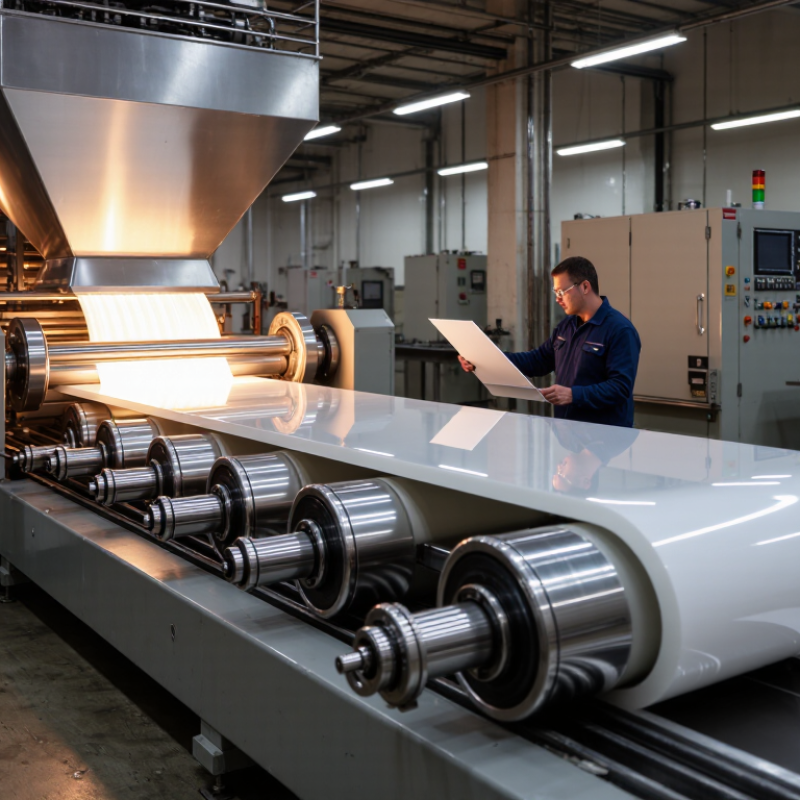
What a PS Sheet Extrusion Line Is
A PS sheet extrusion line is a production system that turns polystyrene resin into a continuous, flat sheet. The resin is fed into a heated extruder, where a rotating screw melts and mixes it. The melt then passes through a flat die, which spreads it across the required width. In a typical setup, polished rollers cool the sheet and help control its thickness and surface.
The line usually includes a feeder, extruder, die, cooling rolls, thickness controls, and a cutting or winding unit. Each part affects the final sheet. For example, uneven feeding can create thickness variation, while poorly matched roller temperatures may leave visible marks or curl. Small changes matter. Operators monitor melt temperature, screw speed, roller gaps, and sheet appearance as production runs.
The grade of polystyrene also matters. General-purpose and impact-modified grades can behave differently, so settings that work for one material may not suit another. A useful quality check is to measure sheet thickness at several points across its width, not just at the edge. Still, measurements alone do not tell the whole story; surface finish and cooling stability deserve attention too. The best line configuration depends on the intended sheet thickness, width, and downstream use.
What Is a PS Sheet Extrusion Line?
A PS sheet extrusion line melts polystyrene, pushes it through a flat die, and cools the sheet on rolls. The chart shows an illustrative temperature profile across key line stages; actual settings depend on the resin grade, equipment, and product.
Illustrative equipment setpoints in °C, not universal specifications. Cooling-roll temperature is shown separately from the melt-processing temperatures.
Materials and Main Components of the Line
A PS sheet extrusion line starts with polystyrene pellets, usually general-purpose PS for clarity or high-impact PS for tougher, opaque sheets. Regrind may also be blended in, but its color and melt consistency need checking. Small differences show up fast. PlasticsEurope’s Plastics—The Fast Facts 2023 reports that global plastics production reached 400.3 million tonnes in 2022. That figure covers all plastics, not polystyrene alone, but it shows the scale of material handling behind sheet production.
The main equipment typically includes a hopper, dosing units, an extruder, a melt filter, a flat die, cooling rolls, and a haul-off system. The screw melts and mixes the resin; the die spreads the melt into a wide, even sheet. Filters catch contamination before it reaches the die. Cooling rolls set thickness and surface finish. Operators watch melt temperature and roll gaps closely. A small adjustment can change the sheet’s clarity or thickness.
Some lines add a melt pump, edge trimmer, or winding unit, depending on the product. Recycled content can reduce virgin-resin demand, though it may also bring variation in color or flow. OECD’s Global Plastics Outlook (2022) estimates that 9% of plastic waste was recycled globally in 2019. That broad figure is not specific to PS sheet, and it cannot predict line performance. Still, it is a useful reminder: material quality matters as much as machine settings.
What Is a PS Sheet Extrusion Line? - Materials and Main Components of the Line
| Line Section | Material or Component | Role in the Process | Typical Details |
|---|---|---|---|
| Raw material | General-purpose polystyrene (GPPS) | Provides the base polymer for clear, rigid sheet. | Thermoplastic resin supplied as pellets. Often selected when transparency and stiffness are important. |
| Raw material | High-impact polystyrene (HIPS) | Provides a tougher, more impact-resistant sheet than standard GPPS. | Rubber-modified polystyrene, commonly used for opaque or colored sheet and formed packaging. |
| Raw material | Colorants and functional additives | Adjust appearance or selected performance properties. | May include pigment concentrates, processing aids, or recycled PS, subject to the product specification and material compatibility. |
| Material preparation | Feed hopper and dosing system | Feeds resin and any specified additives to the extruder at a controlled rate. | Gravimetric or volumetric feeders may be used. Consistent feed helps maintain sheet thickness and output. |
| Plasticizing | Single-screw or twin-screw extruder | Conveys, melts, mixes, and pressurizes the polymer. | Barrel heaters and screw shear provide controlled melting. Temperature settings depend on resin grade, screw design, and production rate. |
| Melt conditioning | Screen changer and melt filter | Removes contaminants and unmelted particles from the polymer melt. | A screen pack is selected for the material and required filtration level; pressure should be monitored for blockage. |
| Melt delivery | Melt pump (optional) | Provides steadier melt flow and pressure to the die. | Used where tighter output control is needed; it is not included in every line configuration. |
| Sheet forming | Flat (T-slot) die | Distributes the melt across the sheet width and forms a continuous sheet curtain. | Die-lip adjustment helps control the transverse thickness profile. Die width and opening are matched to the product range. |
| Cooling and calibration | Three-roll calender stack | Cools, smooths, and helps set the sheet thickness and surface finish. | Roll temperature, roll gap, and speed are adjusted for the resin and target sheet. Polished rolls can produce smooth surfaces. |
| Sheet handling | Take-off unit and edge trimmer | Pulls the sheet through the line and trims uneven edges. | Take-off speed works with extruder output to control draw and thickness. Trimmed edges may be collected for approved reprocessing. |
| Finishing | Winder or sheet stacker | Collects finished sheet as rolls or cut sheets. | The collection method depends on sheet thickness, stiffness, width, and the next converting operation. |
| Process control | Temperature, pressure, and thickness monitoring | Helps operators maintain stable processing and consistent product quality. | Typical measurements include barrel and die temperatures, melt pressure, roll temperatures, line speed, and sheet thickness. |
A PS sheet extrusion line melts polystyrene resin, forms it through a flat die, cools and calibrates it with rolls, then trims and collects the finished sheet. Exact equipment and process settings vary with resin grade, sheet dimensions, and product requirements.
How Polystyrene Sheets Are Extruded
Polystyrene sheet extrusion turns solid pellets into a continuous, flat web. The operator feeds general-purpose or impact-modified polystyrene into a heated barrel, where rotating screws melt and mix the resin. Temperature and screw speed must match the grade. Too much heat can degrade the polymer; uneven melting may leave streaks or weak spots. Small changes matter.
The molten plastic passes through a screen pack and a flat die, which spreads it into a wide sheet. A set of chilled rolls then cools the sheet and controls its thickness and surface finish. Roll spacing, line speed, and cooling balance affect the final gauge. Edges are trimmed, and the sheet is wound or cut to size. The trimmed material may be reused, but repeated heating can alter its performance.
Scale matters, too. PlasticsEurope’s Plastics – the Fast Facts 2023 reports global plastics production of 400.3 million tonnes in 2022; this figure covers all plastics, not polystyrene sheet alone. It places sheet extrusion within a much larger materials industry. A clear sheet may look uniform at the die and still warp as it cools. That detail is easy to underestimate.
Key Operating Parameters and Quality Checks
What Is a PS Sheet Extrusion Line?
Key Operating Parameters and Quality Checks
A PS sheet extrusion line melts polystyrene pellets, pushes the melt through a flat die, then cools and winds the sheet. Operators monitor barrel temperatures, screw speed, melt pressure, and roll temperature. These settings affect flow, thickness, and surface appearance. Small changes matter. A stable feed and even melt help prevent streaks, bubbles, and uneven edges.
Check the sheet across its full width, not just at the center. Measure thickness at regular intervals and inspect for cloudy patches, scratches, waviness, or trapped particles. Watch melt pressure for sudden shifts, which may signal a feed or screen-pack issue. In practice, operators sometimes adjust several settings at once. That makes cause and effect harder to read. Change one parameter, allow the line to stabilize, then check the sheet again. Exact settings vary with the resin, equipment, and target thickness.
Tips: Keep a simple log of temperatures, speed, pressure, and inspection results. Compare readings with the previous stable run. A quick visual check helps, but it cannot replace thickness measurements. Be cautious: a sheet can look smooth and still vary in gauge.
Common Uses of Extruded PS Sheets
What Is a PS Sheet Extrusion Line?
Common Uses of Extruded PS Sheets
A PS sheet extrusion line melts polystyrene resin, pushes it through a flat die, then cools and winds or cuts the sheet. The resulting roll or panel can be thermoformed, printed, punched, or laminated. General-purpose PS is clear but relatively brittle; high-impact PS is tougher and often opaque. Fit matters.
Common uses include clear lids, bakery trays, chilled-food containers, appliance liners, stationery, and point-of-sale displays. A thin sheet may form neatly around a tray mold, while a thicker grade can provide a rigid display panel. Plastics Europe’s 2023 report, Plastics—The Fast Facts, says packaging represented about 40% of European plastics-converter demand in 2022. This covers all plastics, not PS specifically, but shows why packaging applications matter. PS is not ideal for every job: impact, heat, and handling needs can expose weaknesses. Test first.
Tips: Match resin grade and sheet thickness to the forming process. Check sample parts for cracking at corners, uneven walls, and clarity after forming; small trials can reveal issues that a datasheet will not.
