
China Top 10 Sachet Filling Machine Manufacturers
Sachet filling machines turn measured doses into sealed, portable packs used for coffee, seasonings, sauces, personal-care products, and pharmaceuticals. On a production floor, small differences matter: a powder that bridges in a hopper can interrupt dosing, while a weak seal can spoil an otherwise well-filled sachet. Buyers therefore compare more than advertised speed. They examine filling accuracy, sealing consistency, changeover time, material compatibility, cleaning access, and after-sales support.
Industry data helps explain the wider investment trend. PMMI’s 2024 State of the Industry report estimated U.S. packaging machinery shipments at approximately $10.9 billion in 2023. That figure covers packaging machinery broadly, not sachet equipment alone, so it should not be treated as a direct measure of sachet demand. Still, it illustrates the scale of investment in automated packaging. Reports from organizations such as PMMI also highlight labor availability and production efficiency as continuing industry concerns.
China has a broad supplier base, but a polished brochure is not proof of dependable performance. Buyers should ask manufacturers for product-specific test results, clear machine specifications, and references from comparable production lines. A useful comparison also checks whether a supplier can support the chosen film, dosing method, and required output. Details can be easy to overlook. This guide introduces ten Chinese manufacturers of sachet filling machines and considers their equipment, experience, and service capabilities. The list is a starting point, not a substitute for factory audits or sample-pack trials.
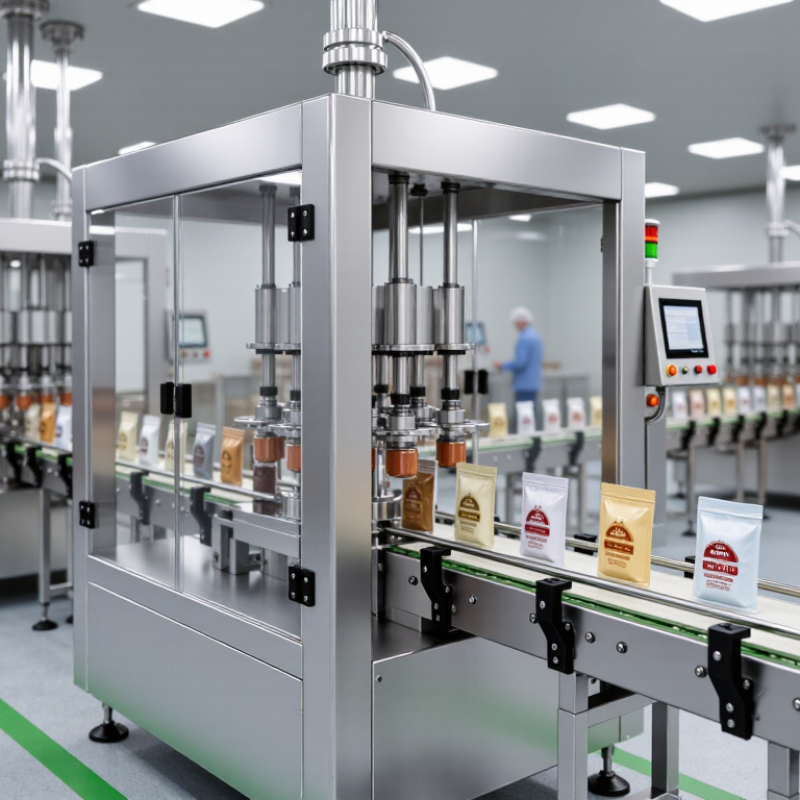
Sachet Filling Machines: Formats, Dosing Methods, and Typical 30–120 Packs per Minute
China Top 10 Sachet Filling Machine Manufacturers
Sachet machines handle formats such as three-side-seal, four-side-seal, and stick packs. Each format uses different film paths, sealing areas, and cutting arrangements. A narrow stick pack can fit a compact drink mix, while a wider sachet may hold shampoo or seasoning. Small details matter: film curl or a dusty seal area can cause leaks.
Dosing methods should match the product, not just the target weight. Auger fillers suit many powders, while multihead weighers handle granules and pieces. Liquids often use pumps or timed filling systems. Test the actual product; powder that flows smoothly in a sample cup may bridge inside a hopper. It happens.
Typical output ranges from about 30 to 120 packs per minute, depending on machine design and product conditions. That number is not a promise. Pack size, dose accuracy, film changes, and operator adjustments all affect sustained speed. Ask for a production trial using your material and packaging film. Check seal strength, fill consistency, and rejected packs, not only the display’s speed reading. A slower, stable line can be more useful than a fast line with frequent stops. The trade-off deserves a closer look.
How Sachet Machines Work: Forming, Filling, Sealing, and Cutting
China Top 10 Sachet Filling Machine Manufacturers
How Sachet Machines Work: Forming, Filling, Sealing, and Cutting
A sachet machine turns a flat roll of packaging film into measured, sealed packets. Film unwinds through guide rollers, while a sensor tracks printed marks and helps control packet length. A forming collar curves the film into a tube. A vertical sealing unit joins its edges, creating a narrow seam. The dosing system then delivers product into each open section. Depending on the material, it may use an auger, pump, or volumetric cup. Heated cross-sealing jaws close the top and form the next packet’s bottom seal. A cutter separates the sachets.
Tips: Check film alignment, seal temperature, and product dose during setup. A small wrinkle can weaken a seal, even when the machine appears to run smoothly.
Good results depend on matching settings to the film and product. Fine powder may need dust control around the sealing area; liquid can cling to the seal zone. Operators should inspect sample sachets for leaks, uneven seams, and inconsistent fill weight. It is easy to blame the dosing unit when weights vary, but film tracking or product flow may also be responsible. In practice, one adjustment at a time makes faults easier to trace. A short test run helps, though it does not replace routine checks during production.
China’s Top 10 Manufacturers: Product Range, Target Industries, and Export Markets
China’s leading sachet-filling machine manufacturers typically offer auger, volumetric-cup, and liquid-pump systems, with options for powder, granule, and paste products. Many also supply film forming, heat sealing, date coding, and multi-lane configurations. These lines serve food, beverage, personal-care, and household-product producers. PMMI’s 2023 State of the Industry report put U.S. packaging machinery shipments at about $10.2 billion in 2022, reflecting strong demand for automated packaging. That figure is not sachet-specific, but it shows the broader investment environment.
Export markets commonly include Southeast Asia, the Middle East, Africa, and Latin America, where buyers often compare throughput, spare-parts access, and local service alongside purchase price. UN Comtrade records relevant machinery under HS 842230, covering equipment for filling, closing, and sealing containers; it does not isolate sachet machines. A useful shortlist should therefore verify each supplier’s actual export references and test samples using the intended film and product. Small details matter. Seal quality can shift with film structure, temperature, and line speed. Catalog specifications alone can look reassuring, yet real production conditions may expose gaps. This comparison is imperfect, but worth making.
Comparing Machine Specifications: Output Speed, Fill Accuracy, and Film Width
When comparing the top ten sachet-filling machine manufacturers, check output speed under the same pouch size, product, and film conditions. A rated speed may describe empty machine cycles, not saleable sachets. Speed is not everything. For multi-lane equipment, confirm whether the figure means cycles per minute or finished sachets per minute. PMMI’s 2024 State of the Industry report highlights productivity and workforce availability as continuing packaging-sector pressures, making stable output and quick changeovers practical comparison points.
Fill accuracy deserves a separate test. Request trial results across the intended dose range, including startup and after a product refill; averages can hide individual underfills or overfills. OIML R 87 sets requirements for the control of prepackaged quantities, a useful reference when defining verification procedures. Film width must also match the forming tube, lane layout, and required seal margins. A wider roll does not automatically mean higher output. Small sachets expose drift. Ask suppliers to test your actual film and product, then record speed, fill variation, and rejected packs. It is easy to overlook setup losses; published peak rates rarely show them.
Sachet Filling Machine Specification Benchmarks
Indicative comparison by machine configuration — output speed, fill accuracy, and film width.
Output Speed
Fill Accuracy
Film Width
These figures are illustrative planning benchmarks for common machine configurations, not verified specifications for particular manufacturers. Actual speed, fill deviation, and compatible film width depend on product, pack size, lane count, materials, and operating conditions. Confirm specifications with suppliers before comparison.
Selecting a Supplier: GMP, CE Marking, and Factory Acceptance Testing
China Top 10 Sachet Filling Machine Manufacturers
A supplier’s GMP claims should be checked against actual design and records. Ask to inspect product-contact surfaces, cleaning access, material certificates, and batch documentation. WHO Technical Report Series 986, Annex 2, describes GMP expectations for documented controls and contamination prevention. Use it as a review reference, not as proof that every machine suits every product. Small details matter.
CE marking is not a general quality award. The European Commission’s Blue Guide explains that manufacturers must assess applicable requirements and maintain technical documentation before affixing the mark. Request the EU Declaration of Conformity, risk assessment, and relevant test records. Confirm that the documents match the machine model and its intended use. A logo alone is not enough.
Factory Acceptance Testing (FAT) should turn promises into observable results. Agree on product, film, target speed, fill-weight tolerance, seal checks, reject function, and stop-recovery tests before the visit. Record actual readings and retain sample sachets. ISO 2859-1 provides statistical sampling plans for attribute inspection; agree the inspection level and acceptance criteria in advance. One uncomfortable point: a short, carefully staged run may hide faults that appear during longer production. Make the test conditions realistic, and document any deviations.
China Top 10 Sachet Filling Machine Manufacturers - Selecting a Supplier: GMP, CE Marking, and Factory Acceptance Testing
Supplier evaluation checklist for comparing sachet-filling machine proposals. The checks below are selection criteria, not a ranking of named manufacturers.
| Evaluation Check | What to Verify | Documents or Test Evidence | Suggested Acceptance Basis |
|---|---|---|---|
| 1. GMP-Suitable Design | Assess whether product-contact surfaces, machine layout, access for cleaning, and material choices suit the product and the applicable GMP requirements. GMP suitability depends on the intended process; a machine itself should not be assumed to be “GMP certified.” | Drawings, product-contact material list, surface-finish information where relevant, cleaning instructions, and a documented design review. | Approve against the buyer’s product, cleaning process, facility, and documented user requirements. |
| 2. CE Marking and EU Compliance | For equipment placed on the EU market, check that the applicable conformity-assessment requirements have been addressed. Verify the CE marking, the EU Declaration of Conformity, and the machinery and other legislation applicable to the equipment. | Machine nameplate, signed EU Declaration of Conformity, risk assessment, and relevant technical documentation or supporting records. | Confirm that the declaration identifies the supplied machine and applicable legislation and that its safety features match the delivered configuration. |
| 3. Factory Acceptance Testing (FAT) | Agree the FAT protocol before production or shipment. Test the machine using the specified sachet format and, where practical, the intended product or a representative test material. | Approved FAT protocol, completed test results, non-conformance list, photographs or video where useful, and signed FAT report. | Pass only when the agreed test steps and buyer-defined limits are met, with deviations recorded and dispositioned. |
| 4. Filling Accuracy and Repeatability | Check the dosing system with the product’s relevant properties in mind, such as viscosity, flowability, particle size, and temperature sensitivity. Define the sample size and measurement method in advance. | Calibration records, test weights or measurement records, sample results, and details of the product and operating conditions used. | Use the buyer’s approved fill-weight or fill-volume limits and test method; do not rely on an unqualified brochure accuracy figure. |
| 5. Output Rate and Run Stability | Verify output at the agreed sachet size, number of lanes, product, and operating conditions. Distinguish rated speed from sustained production performance. | FAT production log showing running time, good sachets produced, rejects, stoppages, and operating settings. | Set the required good-sachet output and test duration in the purchase specification, including how downtime and rejects are counted. |
| 6. Film Handling and Sachet Format | Confirm compatibility with the selected packaging material, film width, roll dimensions, print registration method, and required sachet style, such as three-side or four-side seal. | Approved packaging specification, machine layout or format drawings, and sample sachets produced during the FAT. | Accept when the machine runs the agreed material and format and produces sachets within the buyer’s approved dimensional and print-registration tolerances. |
| 7. Seal Quality and Leak Integrity | Evaluate seal appearance and integrity using a method appropriate to the package and product. Set suitable sealing temperature, pressure, and dwell-time ranges for the selected film. | Seal inspection records, agreed leak or seal-strength test results, and documented machine settings used during testing. | Define pass/fail criteria and sampling in advance; verify that seals are continuous and meet the buyer’s package-performance requirements. |
| 8. Changeover and Cleaning | Review the steps and tools required to change sachet size or product, clean product-contact parts, and restore the machine to production. Consider cross-contamination risks for the intended products. | Changeover and cleaning instructions, parts list, observed FAT demonstration, and estimated task durations under stated conditions. | Approve the procedure and target changeover conditions based on the buyer’s operating needs; document any product-specific cleaning validation separately. |
| 9. Machine Safety and Controls | Inspect guarding, emergency stops, interlocks, electrical design, alarms, and access for operation and maintenance. Verify safety functions on the delivered machine. | Risk assessment, electrical drawings, safety-device list, operating manual, and FAT safety-function test records. | Require documented risk-reduction measures and successful checks of the agreed safety functions before acceptance. |
| 10. Documentation, Training, and Support | Confirm that the supplier will provide usable operating and maintenance information, recommended spare parts, training, and a clear process for technical support. | Manuals, parts list, maintenance schedule, training plan, warranty terms, and support contact and response arrangements. | Make delivery of the agreed documentation and completion of required training part of the handover and final acceptance conditions. |
Note: FAT limits, sampling plans, performance targets, and acceptance criteria should be agreed by the buyer and supplier in the purchase specification. Applicable regulatory requirements depend on the destination market, machine configuration, and intended use.
Related Posts
-
What is a Sachet Filling Machine and How Does it Work in Packaging Industry
-
The Comprehensive Handbook for Selecting the Best Bag Filling Machine
-
China Top Pouch Packing Machine Suppliers?
-
How to Choose an Automatic Packing Machine in 2026?
-
China Best Automatic Packing Machine for Global Buyers
-

Top 10 Insights into Chinas Packaging Industry for Global Buyers?